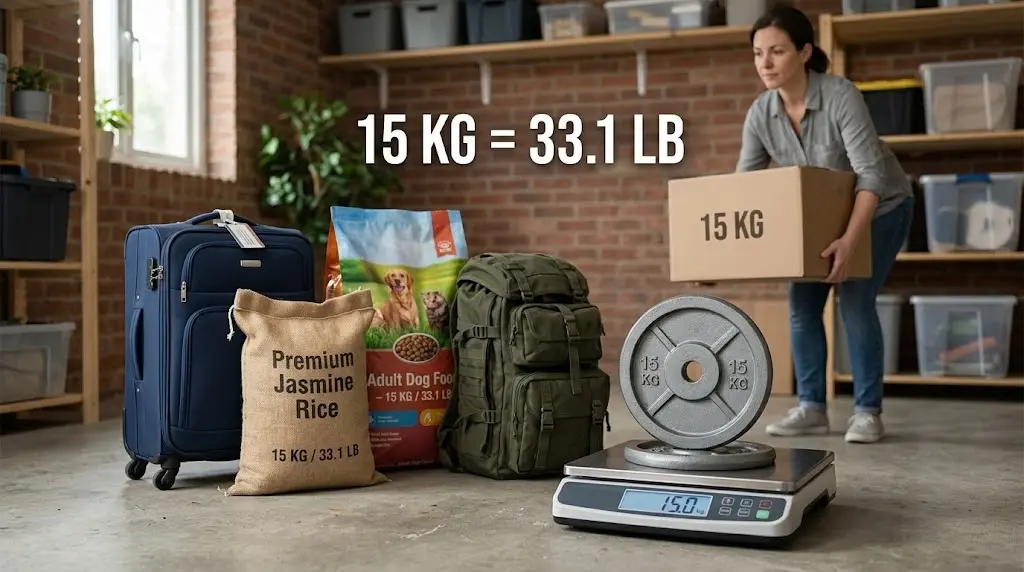
How Heavy Is 15 Kg? If someone tells you a suitcase weighs 15 kg, your brain might just… blank. Is that light enough to swing onto a shelf? Or heavy enough to throw your back out?
You’re not alone. Kilograms are one of those numbers that feel abstract until you connect them to something you’ve actually held. This guide gives you the exact conversion first, then walks through what 15 kg actually feels like, in suitcases, kettlebells, rice bags, and even toddlers, so the number finally sticks.
Quick Answer: 15 Kg in Pounds, Stone, and Ounces
15 kg = 33.07 pounds = 2.36 stone = 528.99 ounces.
For most healthy adults, 15 kg is a moderately heavy weight. You can lift it off the ground without much trouble, but carrying it any real distance, across an airport, up a flight of stairs, will start to burn your shoulders and forearms.
| Unit | Value |
| Pounds (lbs) | 33.07 lbs |
| Stone | 2.36 stone |
| Ounces | 528.99 oz |
| Grams | 15,000 g |
What Does “Moderately Heavy” Actually Mean?
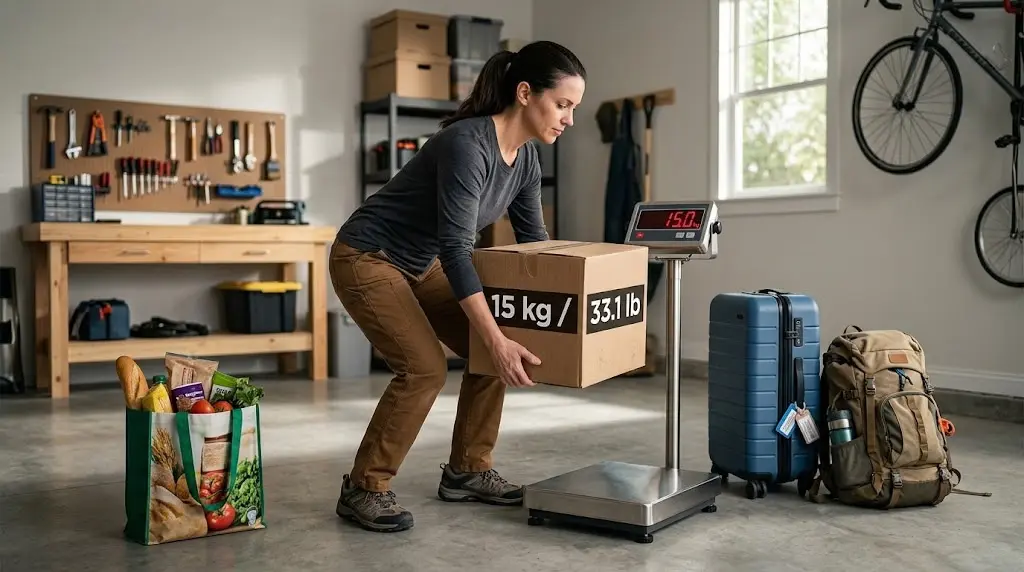
“Moderately heavy” isn’t a precise term, but it’s a useful one. It means 15 kg sits in a middle zone: heavy enough that you’ll notice it in your grip and shoulders, but light enough that most healthy adults can lift and carry it short distances without help.
Why Numbers Alone Don’t Feel Real
Here’s the thing about weight: your brain doesn’t process “How Heavy Is 15 Kg” the same way it processes “a bag of rice you’ve carried before.” Numbers are abstract. Objects are concrete. That’s why the rest of this guide leans so heavily on comparisons instead of just repeating the conversion.
How Your Brain Processes Weight Comparisons
When you picture a kettlebell or a packed suitcase, your brain draws on muscle memory, the actual sensation of lifting something similar. That’s a far faster, more intuitive way to understand a number than doing math in your head. It’s also why teachers use this trick with kids, and why this guide uses it with you.
How Heavy Is 15 Kg Compared to Everyday Things?
Here’s how 15 kg lines up against objects you’ve probably encountered.
| Object | Approx. Weight | How It Compares |
| Medium packed suitcase | 14–16 kg | Right at 15 kg, the classic reference point |
| Large bag of dog food | 14–20 kg | Sits at or slightly above 15 kg |
| Bag of rice (household size) | 15 kg | Almost exactly 15 kg in many markets |
| Kettlebell (gym) | 15 kg | A common “intermediate” kettlebell size |
| 15-liter water container | 15 kg exactly | Water is the most precise reference,1 liter = 1 kg |
| Countertop microwave | 12–18 kg | Lands close to 15 kg depending on the model |
| Average toddler (age 3–4) | 13–17 kg | 15 kg is roughly the midpoint for this age |
| Entry-level mountain bike | 12–16 kg | Aluminum-frame bikes land close to 15 kg |
The water comparison is worth calling out: because 1 liter of water weighs almost exactly 1 kg, a 15-liter container gives you the single most scientifically precise way to picture this weight, no estimating required.
15 Kg in Everyday Life
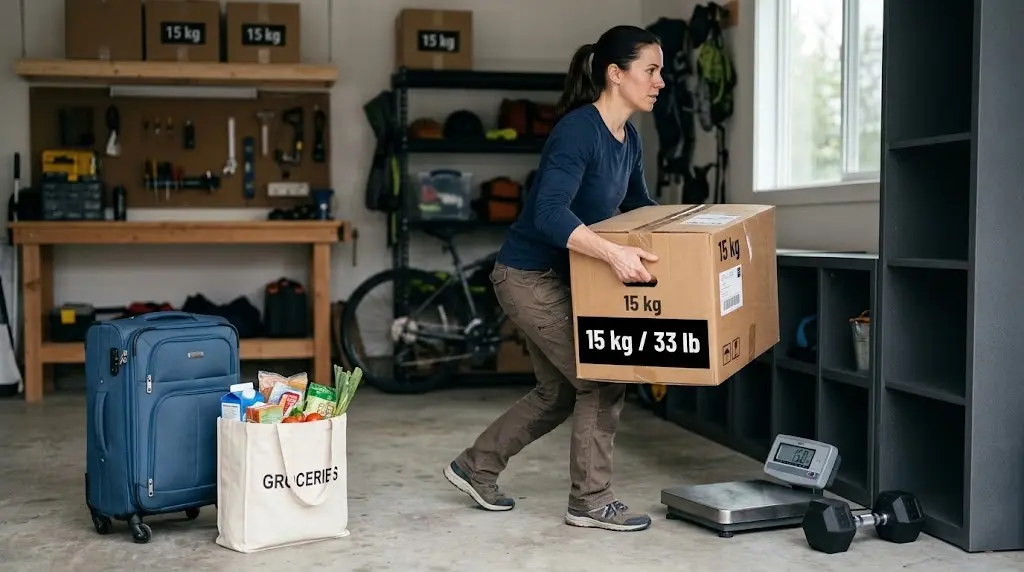
How Heavy Is 15 Kg in everyday life? Numbers matter more in some situations than others. Here’s where 15 kg actually comes up.
Travel & Luggage
If you’ve ever struggled to zip a suitcase shut, you’ve probably brushed up against the 15 kg mark. It’s a common weight for a fully packed medium suitcase on a short trip.
Is 15 kg heavy for a carry-on? It depends entirely on the airline. Many budget carriers cap carry-on weight well below 15 kg, often in the 7–10 kg range, which means a bag at 15 kg would likely need to go in the hold or incur a fee. Full-service airlines sometimes allow more. Always check your specific airline’s policy before you pack, since limits vary significantly and change over time.
Checked baggage limits to know Standard economy checked baggage allowances on many airlines fall between 20–23 kg, which means 15 kg comfortably fits within a single checked bag on most carriers, but again, confirm with your airline directly, since this isn’t universal.
Fitness & Gym
Kettlebell and dumbbell comparisons A 15 kg kettlebell is a common size for intermediate lifters, heavy enough to challenge grip and shoulder stability, especially in single-arm holds or swings, but manageable for someone with some training experience. If you’re newer to strength training, 15 kg may feel demanding for overhead or single-arm movements.
Household Items
Rice, dog food, and water containers Bulk rice bags and large dog food bags are frequently sold in sizes that land right around 15 kg, which is part of why this weight feels so familiar to anyone who’s grocery shopped or fed a large dog.
Microwave ovens and appliances Mid-size countertop microwaves typically weigh 12–18 kg, with many popular models landing close to 15 kg, which is why moving one during a kitchen renovation can be more of a workout than expected.
Parenting
Average toddler weight (ages 3–4) According to CDC growth chart data, children between 3 and 4 years old typically weigh somewhere in the 13–17 kg range, putting 15 kg close to the average for this age group. That’s part of why parents often find this comparison the most intuitive one on the list, they’ve carried it.
15 Kg vs. Nearby Weights
Comparing 15 kg to weights just above and below it helps calibrate exactly how heavy it is, relative to what you might already know.
10 Kg vs. 15 Kg
Ten kilograms is noticeably lighter, closer to a small dog or a couple of large textbooks. Stepping up to 15 kg adds roughly 50% more weight, which is enough to feel meaningfully different in your arms, especially over a longer carry.
15 Kg vs. 20 Kg
Twenty kilograms is a real step up from 15 kg, you’ll likely need two hands, and many people find sustained carrying uncomfortable at that weight without proper form. If 15 kg feels manageable to you, 20 kg is where things start to feel genuinely demanding.
How Heavy Is 15 Kg to Lift? A Practical Breakdown
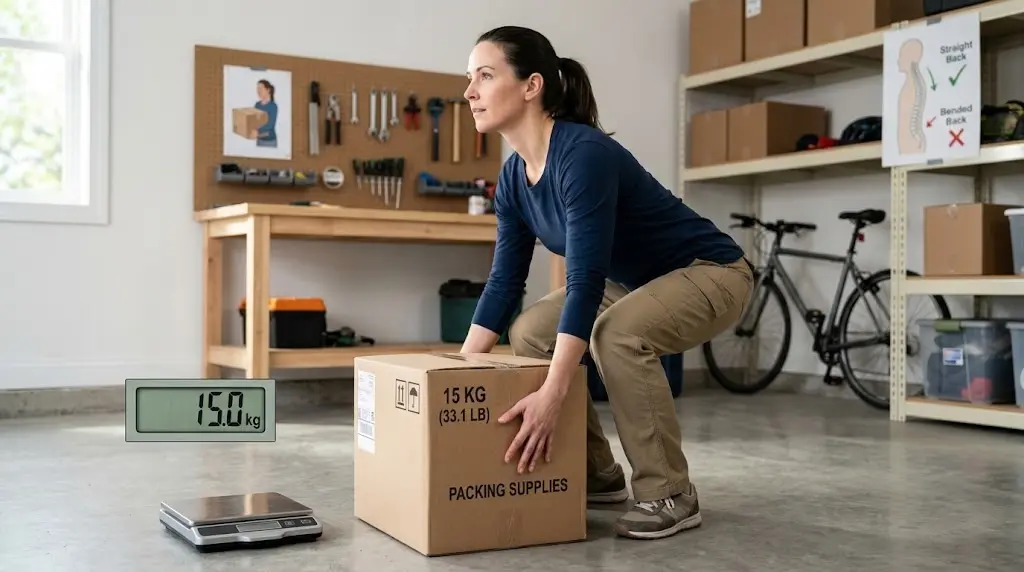
Whether 15 kg feels easy or difficult depends heavily on how you’re lifting it and who’s doing the lifting.
One-Hand vs. Two-Hand Lifting
- One-handed (like a kettlebell or suitcase handle): Noticeably challenging for most people. Your grip and forearm fatigue faster than the rest of your body.
- Two-handed (like hugging a bag of rice to your chest): Considerably easier, since the load is distributed and closer to your center of gravity.
By Age and Strength Level
- Healthy adults: Can typically lift 15 kg off the ground without assistance, though carrying it any real distance will cause fatigue.
- Older adults or those with limited strength: May find 15 kg genuinely difficult and should avoid lifting it alone if it causes strain or discomfort.
- Children: Should not be expected to lift 15 kg independently, it exceeds safe lifting guidance for most children’s age and strength levels.
Quick Safety Tips for Lifting
- Bend at the knees, not the waist, to protect your lower back.
- Keep the object close to your body rather than extending your arms.
- If you’re unsure whether you can safely lift 15 kg, ask for help, there’s no downside to being cautious.
This is general lifting guidance, not medical advice. If you have a back condition, injury, or other health concern, consult a healthcare professional before lifting heavy objects.
Frequently Asked Questions
How many pounds is 15 kg?
15 kg equals 33.07 pounds.
Is 15 kg heavy to carry?
For most healthy adults, yes, noticeably, especially over distance or with one hand. It’s manageable for short lifts but tiring to carry far.
What weighs about 15 kg?
Common examples include a medium packed suitcase, a 15-liter water container, a large bag of dog food or rice, a 15 kg kettlebell, and a toddler around age 3–4.
Is 15 kg heavy for a suitcase?
It’s a fairly typical weight for a fully packed medium suitcase, but whether it’s “too heavy” depends on your airline’s specific carry-on or checked baggage limits.
How much does a 3-year-old weigh compared to 15 kg?
According to CDC data, 15 kg falls close to the average weight range for children aged 3–4, making it one of the most relatable comparisons for parents.
How many stone is 15 kg?
15 kg equals approximately 2.36 stone.
Summary: How Heavy Is 15 Kg?
How Heavy Is 15 Kg? It equals 33.07 pounds, or about 2.36 stone,a moderately heavy weight most healthy adults can lift without help, though carrying it far will tire you out. The easiest way to picture it: a packed suitcase, a 15-liter water jug, a large bag of dog food, or a toddler around age 3–4. Whether it feels “heavy” really depends on how you’re lifting it, who’s doing the lifting, and how far you need to carry it.