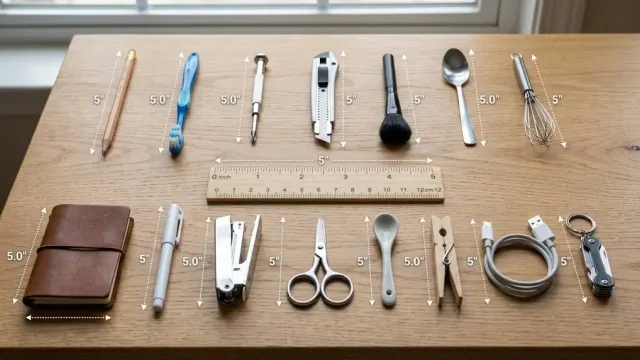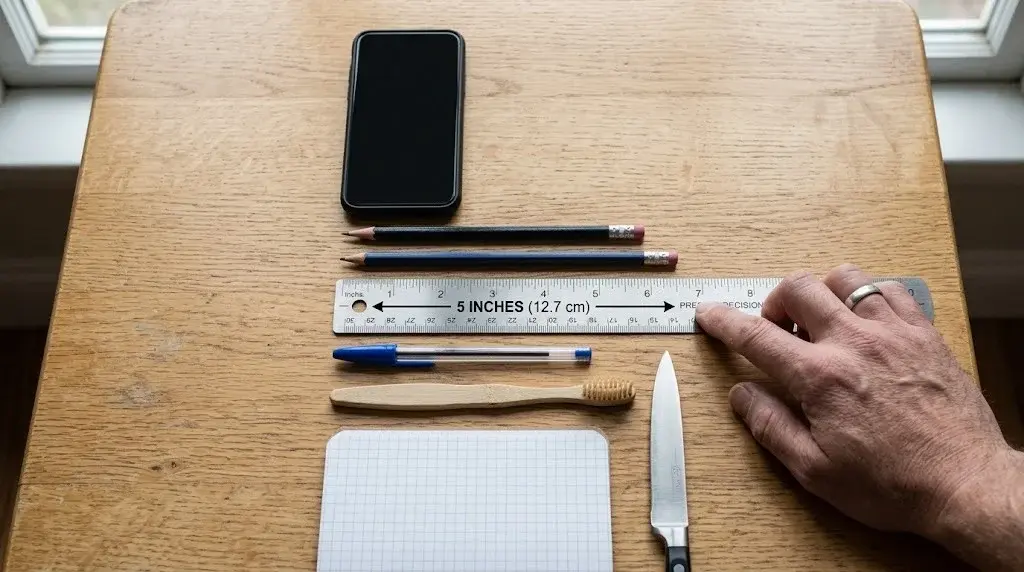
You’re staring at a product listing. “5 inches,” it says. But what does that actually mean in your hand, your bag, your kitchen drawer?
Most of us are surprisingly bad at picturing measurements out of context. A number on a screen doesn’t tell you much, but a familiar object does. That’s the fastest way to actually understand size: not math, but memory.
This guide gives you both. You’ll get the exact conversions, a side-by-side comparison table, and a list of everyday objects that are almost exactly 5 inches long, so the next time you need to judge a size, you won’t need a ruler.
Quick Answer: How Long Is 5 Inches?
5 inches equals 12.7 centimeters, 127 millimeters, or 0.417 feet. It’s about the height of a standard soda can, the length of a passport, or the width of an adult hand held flat. Think “a bit longer than a credit card is wide, a bit shorter than half a foot.”
5 Inches in CM, MM, and Feet
| Unit | Value |
| Centimeters | 12.7 cm |
| Millimeters | 127 mm |
| Feet | 0.417 ft |
| Meters | 0.127 m |
Why the metric equivalent matters: If you shop internationally, follow recipes from other countries, or just think more naturally in centimeters, converting once and remembering “5 inches ≈ 12.7 cm” saves you from doing math every time. It’s also worth noting that 5 inches is not the same as half a foot, half a foot is 6 inches, so 5 inches is about 17% shorter than that.
5 Inches Comparison: Everyday Objects at a Glance
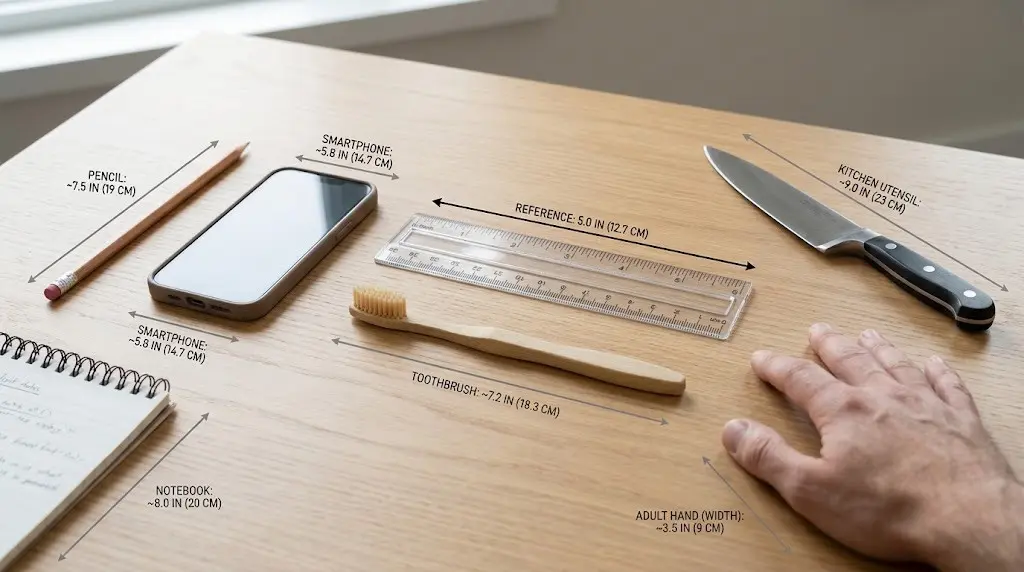
Here’s the fastest way to build a mental picture. Each of these is close enough to 5 inches to use as a real-world ruler.
| Object | Actual Length | How Close to 5″ |
| Standard soda can (height) | ~4.8 in | 96% |
| Passport (length) | ~4.9 in | 98% |
| 3×5 index card (short side) | 5.0 in | 100% |
| Computer mouse (compact/travel) | ~4.7–5.0 in | ~95–100% |
| Adult palm width (hand span, fingers spread) | ~4–5 in | ~90–100% |
| Disposable razor (blade guard to handle end) | 5.0 in | 100% |
| Teaspoon (handle length) | ~4.5–5 in | ~90–100% |
| Small paperback (width) | ~4.5–5 in | ~90–100% |
No single object is a perfect substitute for a ruler, but a few of these, the index card and the disposable razor especially, are close enough to treat as exact.
Household & Office Items That Are 5 Inches
Soda can. A standard aluminum can stands about 4.8 inches tall, just a hair under 5 inches. Because almost everyone has one within reach, it’s one of the most reliable mental references you can build.
Passport. Most passports measure about 4.9 inches in length, and passport dimensions are standardized globally, so this comparison holds up almost anywhere in the world. If you’re wondering whether something will fit in a travel pouch or document organizer, picture your passport next to it.
3×5 index card. The short side of a standard index card is exactly 5 inches. If you have one lying around, it’s the single most accurate free “ruler” on this list.
Teaspoon. A standard teaspoon handle runs close to 5 inches. It’s a small, easy comparison for judging the length of other slim objects, pens, small tools, hair accessories.
Tech & Personal Care Items That Are 5 Inches
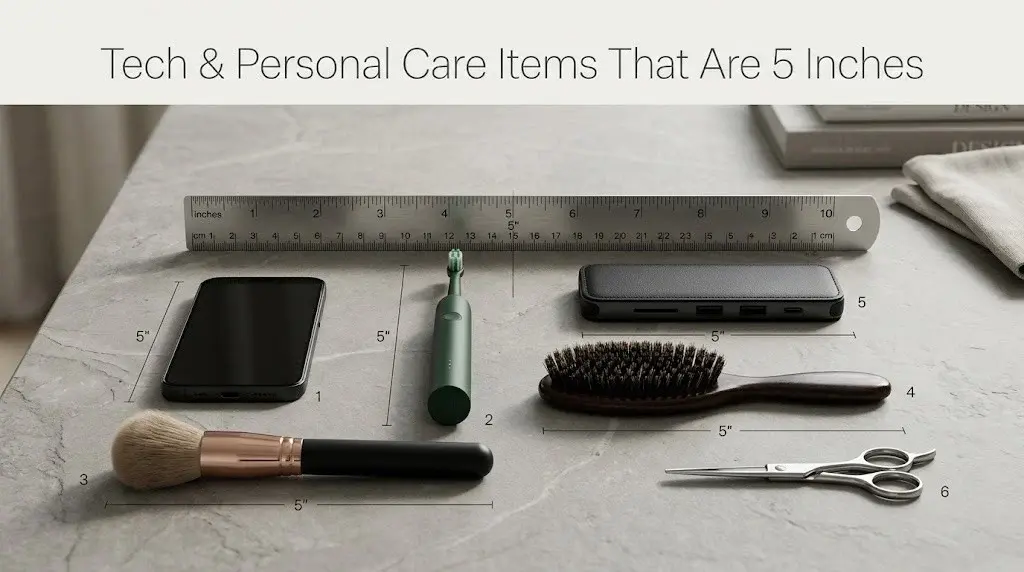
Computer mouse. Compact or travel-sized mice, the kind designed to fit in a laptop bag, typically measure right around 5 inches long. Full-sized desktop mice tend to run a bit longer.
Disposable razor. A standard disposable razor, measured from the top of the blade guard to the bottom of the handle, is almost exactly 5 inches. That length isn’t accidental, it’s long enough for grip and control without becoming unwieldy.
Hairbrush handle. Travel-size hairbrushes typically have a handle around 5 inches long, small enough for a toiletry bag, long enough to use comfortably.
Small tablet or e-reader screen. Compact tablets and older e-reader models often have screens close to 5 inches across, making them a handy tech-based reference if you’re comparing accessories or cases.
How to Measure 5 Inches Without a Ruler
You don’t need a tape measure for a rough-but-reliable estimate. Try any of these:
- Use a 3×5 index card. The short edge is exactly 5 inches, lay it flat against whatever you’re measuring.
- Use your phone. Most smartphones are close to 5–6 inches tall; check your specific model’s dimensions once, and you’ll always have a reference in your pocket.
- Line up five standard paperclips end to end, each is roughly 1 inch, so five gets you close to 5 inches.
- Use a soda can. Stand it next to the object; it’ll be just slightly shorter than 5 inches, so add a small margin.
Using Your Own Body as a Reference
Palm width. For most adults, the width of an open hand, measured from the edge of the palm to the tip of the pinky, with fingers slightly spread, lands somewhere between 4 and 5 inches. Adult male palms average around 3.5 inches at the palm itself, with female palms averaging closer to 3.1 inches; the wider hand-span measurement (with fingers spread) is what gets closer to the full 5-inch mark.
Calibrate it once. Measure your own hand against an actual ruler one time, and you’ll have a personalized, always-available 5-inch reference for the rest of your life. This is genuinely one of the most useful habits for anyone who frequently needs eyeball sizes, while shopping, packing, or doing quick DIY checks.
5 Inches vs. Other Common Lengths
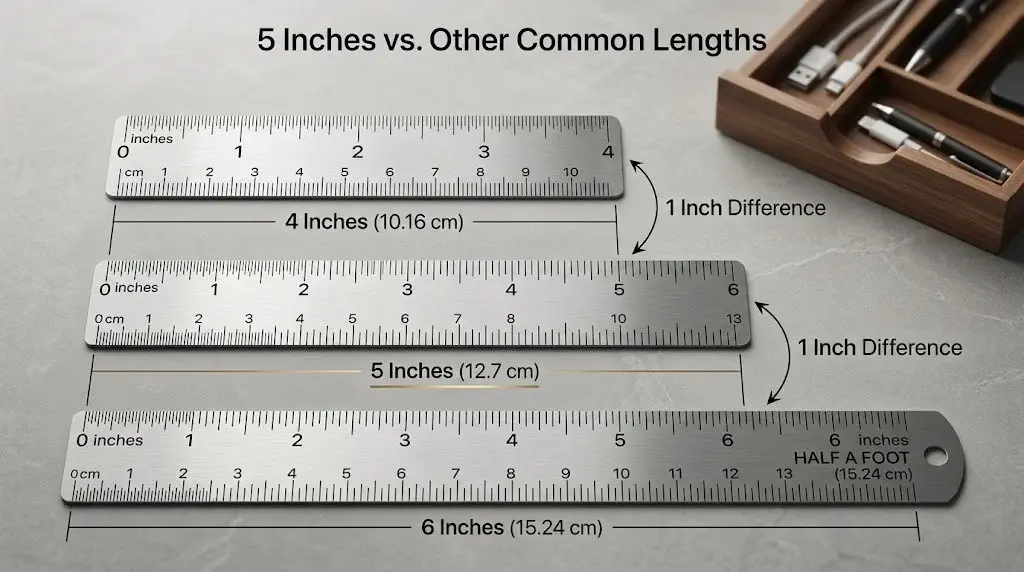
5 inches vs. 4 inches. The difference is about the width of a thumb, small, but noticeable when you’re working with tight spaces like drawer organizers or small parts bins.
5 inches vs. 6 inches. Six inches is exactly half a foot. The one-inch difference between 5 and 6 inches is often the gap between “just fits” and “just doesn’t” in pouches, cases, and small storage spaces.
5 inches vs. half a foot. These are commonly confused, but they’re not the same. Half a foot is 6 inches exactly, making it about 17% longer than 5 inches. If a product listing says “roughly half a foot,” don’t assume it means 5 inches, confirm the actual number.
Common Mistakes When Estimating 5 Inches
- Assuming 5 inches equals half a foot. It doesn’t, half a foot is 6 inches.
- Using a full-size object as a stand-in for a compact version. A regular computer mouse is longer than 5 inches; only compact/travel mice land near that mark.
- Ignoring the difference between length, width, and diagonal. A “5-inch screen” almost always refers to the diagonal measurement, not the width or height, this trips people up constantly with phones and tablets.
- Relying on a single mental reference without calibrating it. If you’ve never actually measured your soda can or your own palm against a ruler, you’re estimating an estimate. Check once, then trust it.
FAQs
Is 5 inches the same as half a foot?
No. Half a foot is 6 inches. Five inches is about 17% shorter than half a foot, or roughly the width of a thumb less.
What common object is exactly 5 inches?
A standard 3×5 index card’s short side and a typical disposable razor (blade guard to handle end) are both almost exactly 5 inches, two of the most reliable references available.
How many centimeters is 5 inches?
5 inches equals 12.7 centimeters, or 127 millimeters.
How can I measure 5 inches without a tool?
Use a 3×5 index card, your phone’s height (check your model’s exact dimensions), five paperclips laid end to end, or your own palm width once you’ve calibrated it against a real ruler.
Summary
Five inches is 12.7 centimeters, roughly the height of a soda can, the length of a passport, or the width of a spread hand. It’s one inch short of half a foot, a distinction that trips up more people than you’d expect. The fastest way to internalize this measurement isn’t memorizing the number; it’s connecting it to something you already hold in your hands every day. Pick one or two references from this guide, the index card and your own palm are the most practical, and you’ll never need to guess again.