Reviewed for accuracy against UK Health and Safety Executive (HSE) and OSHA lifting guidance.
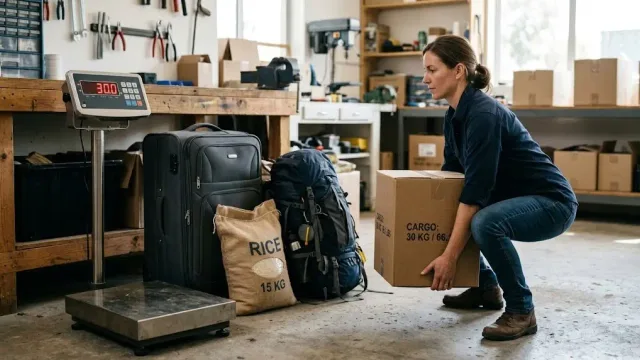
Pick up a bag of cement, a large bag of dog food, or a full suitcase at the airport check-in, and you’ve probably felt something close to 30kg without even realising it. But what does that number actually mean? Is it something you could carry across a car park without breaking a sweat, or something that would leave your back aching for a week?
In this guide, you’ll get the exact conversion, a set of comparisons you’ll actually recognise, and some honest context on whether 30kg counts as heavy, for you, for a child, or for a suitcase heading through airport security. By the end, you’ll know exactly how heavy 30kg is, what it feels like, and what everyday objects can help you picture it.
Quick Answer: How Heavy Is 30kg?
30kg is equal to 66.14 lbs (roughly 66 lbs), or about 4 stone 10 lbs. It’s roughly half the body weight of an average adult, similar to a medium-sized dog, and it’s the point at which most health and safety guidelines start recommending extra care when lifting.
| Unit | Value |
|---|---|
| Pounds (lbs) | 66.14 lbs |
| Stone | 4 stone 10.1 lbs |
| Grams | 30,000 g |
| Ounces | 1,058.2 oz |
30kg Converted: Pounds, Stone, and Grams

30kg in Pounds
The most commonly asked version of this question is simple: how many pounds is 30 kg? If you’re converting 30kg to lbs, the answer is 66.14 lbs, which most people round to 66 lbs for everyday use.
30kg in Stone (UK)
In the UK, body weight is usually described in stone rather than pounds or kilograms. Since one stone equals 14 lbs, 30kg works out to 4 stone and 10.1 lbs. This is a useful reference if you’re used to talking about weight in stone rather than kilos, for example, when comparing 30kg to your own body weight.
30kg in Grams and Ounces
For smaller-scale comparisons, 30kg is 30,000 grams, or 1,058.2 ounces. You’ll see this version used more in cooking, shipping, or science contexts than in everyday conversation.
How to Convert kg to lbs Yourself
You don’t need a calculator every time. Multiply the number of kilograms by 2.2046, and you’ll get pounds. So for 30kg: 30 × 2.2046 = 66.14 lbs. A quicker mental shortcut is to double the kilograms and add 10%, which gets you close enough for everyday purposes.
Is 30kg Heavy? It Depends on Context
How Heavy Is 30kg? There’s no single yes-or-no answer. It depends entirely on what’s carrying the weight and how it’s held.
For an Average Adult
An average adult weighs somewhere between 60–80kg, so 30kg represents roughly half of many adults’ own body weight. Most healthy adults can lift 30kg once or twice with good form, but carrying it any distance, especially up stairs, starts to feel demanding fairly quickly.
For a Child
For a young child, 30kg can be close to their entire body weight. Worth remembering any time you’re lifting something heavy near children, or explaining weight to them in relatable terms, what feels like a normal load to you could genuinely be too much for them to attempt.
For Everyday Lifting Tasks
Setting also changes the equation. A 30kg backpack with padded, well-fitted straps feels far easier than a 30kg box with no handles, because your body can spread the load properly. The shape of a 30kg object often matters more than the figure itself, a point worth remembering before you decide something’s “too heavy” based on weight alone.
What Weighs 30kg? Everyday Comparisons
How Heavy Is 30kg? Numbers are useful, but comparisons are what actually help you picture a weight. Here’s how 30kg shows up in real life, sorted by category.
Fitness & Gym Comparisons
- A 30kg dumbbell, a genuine intermediate-to-advanced strength milestone for most gym-goers.
- An Olympic barbell (20kg) plus a 10kg weight plate on each side, roughly reaching this total.
- A starter kettlebell set (12kg + 10kg + 8kg) adding up to about 30kg combined.
- Two 15kg dumbbells held together, a common way lifters build up to a heavier single weight.
- Two bowling balls (15–16 lbs each) come close to 30kg together, worth knowing if you’ve ever wondered why carrying a pair back to the rack takes real grip strength.
Household Comparisons
- 30 litres of water, the cleanest reference point, since one litre of water weighs almost exactly one kilogram.
- A queen-size box spring, which typically falls in the 27–32kg range.
- Around four gallons of paint, or two full 5-gallon buckets shared between two hands.
- A large gas barbecue cylinder, roughly three full propane tanks’ worth.
- A stacked washer-load of wet laundry, once the water weight is factored in.
- A countertop microwave, which typically weighs 28–32kg once you account for the transformer and metal shielding, one of the heaviest single appliances in a kitchen.
- A pair of standard passenger car tyres (roughly 11–15kg each) stacked together, a comparison most drivers have unknowingly handled.
If you want to see how 40kg compares with everyday objects, check out our guide to how much 40kg is.
Animal Comparisons
- A healthy adult Bulldog, or similar medium breeds like Cocker Spaniels and Beagles, which often land right around the 30kg mark when fully grown.
- A large adult cat breed at the extreme upper end would need to be several times overweight to approach this, a helpful reminder of just how substantial 30kg actually is for a living creature.
Comparison Table
| Category | Object | Approx. Weight |
|---|---|---|
| Fitness | 30kg dumbbell | 30kg |
| Fitness | Olympic bar + 2×10kg plates | ~30kg |
| Fitness | Starter kettlebell set (12+10+8kg) | ~30kg |
| Fitness | Two bowling balls (15–16 lbs each) | ~30kg |
| Household | 30 litres of water | 30kg |
| Household | Queen box spring | 27–32kg |
| Household | Two 5-gallon paint buckets | ~30kg |
| Household | Large gas BBQ cylinder | ~27–30kg |
| Household | Countertop microwave | 28–32kg |
| Household | Pair of car tyres | ~22–30kg |
| Animals | Adult Bulldog / similar breed | 25–35kg |
| Travel | Checked suitcase (extended allowance) | up to 30kg |
| Reference | Average child’s body weight (age ~9–10) | ~28–32kg |
Why a Compact 30kg Object Feels Heavier Than a Bulky One

Here’s something most weight guides skip entirely: 30kg doesn’t always feel the same.
Quick fact: A compact object concentrates its full weight into a small grip area, while a bulkier object of the same weight spreads that load across your whole body, which is why a dumbbell can feel much harder to manage than a backpack of identical weight.
A solid dumbbell puts all 30kg into the small area you have to grip tightly. A bulkier object, like a canoe or a padded backpack, spreads that same load across a wider surface and lets your body support it more naturally. If you’re planning to lift or move something around 30kg, how the weight is distributed matters just as much as how much it weighs.
30kg and the Human Body
With average adult body weight sitting between 60–80kg, 30kg is a genuinely useful “half your own weight” reference, a good way to picture the load without needing a scale in front of you. For children, particularly those around age 9–10, 30kg can sit close to their entire body weight, which is one reason this figure comes up so often in conversations about child safety around heavy objects and luggage.
Understanding where you personally sit against that 30kg mark leads naturally into the next question: how do you handle that weight safely?
How Heavy Is 30kg to Lift or Carry Safely?
Safe Lifting Guidelines
In the UK, the Health and Safety Executive (HSE) provides official guidance on manual handling, a term simply referring to any task involving lifting, carrying, pushing, or pulling weight. General guidance from HSE, echoed by the US Occupational Safety and Health Administration (OSHA), recommends particular caution with repeated lifting above roughly 20–25kg without support. At 30kg, you’re at a weight where technique and frequency matter more than raw strength, especially if you’re lifting repeatedly through the day.
Proper Lifting Technique
- Bend at your knees, not your back
- Keep the object close to your body
- Engage your core before lifting
- Lift with your legs, not your spine
- Avoid twisting while carrying a heavy load
When to Ask for Help or Use Equipment
If something feels too heavy the moment you go to lift it, trust that instinct. A trolley, dolly, or a second pair of hands isn’t a shortcut, it’s the safer choice, particularly for anyone with existing back issues, older adults, or anyone lifting outside their usual routine.
This is general safety information, not medical advice. If you have a pre-existing injury or health condition, speak with a doctor or physiotherapist before undertaking heavy lifting.
30kg in Travel: Airline Baggage Limits
Airline weight limits vary by carrier, route, and ticket class, so always confirm your specific airline’s current policy before you fly, the figures below are typical ranges, not guarantees.
Airlines treat 30kg as a meaningful threshold. Many international carriers cap standard economy checked baggage at 23kg, while some carriers, particularly certain Middle Eastern and Asian airlines, or premium cabin allowances, permit up to 30kg per bag.
| Baggage Type | Typical Weight Limit |
|---|---|
| Standard economy checked bag | 20–23kg |
| Premium/business class checked bag | 30–32kg |
| Some long-haul carriers (extended allowance) | up to 30kg |
Common Mistakes People Make Estimating Weight
- Myth: All 30kg objects feel equally heavy.
- Fact: Shape and grip matter as much as the number, a compact object feels heavier than a spread-out one of the same weight.
- Myth: If you can lift it once, it’s safe to carry any distance. Fact: Repeated or prolonged carrying at 30kg increases strain risk, even if a single lift felt manageable.
- Myth: Kilograms and pounds are roughly a 1:1 swap. Fact: 1kg is about 2.2 lbs, mixing these up is a common source of confusion, especially when checking baggage or gym weights.
Frequently Asked Questions
How Heavy Is 30kg?
30kg equals 66.14 lbs, or about 4 stone 10 lbs. In everyday terms, it’s roughly the weight of a packed suitcase, a 30kg dumbbell, or 30 litres of water.
How many pounds is 30kg?
30kg equals 66.14 lbs, or 4 stone 10.1 lbs in UK terms, commonly rounded to 66 lbs for everyday use.
Is 30kg heavy for a person to lift?
A single lift with good form is manageable for most healthy adults, but the real risk comes from repetition, lifting 30kg dozens of times a day is a very different task from lifting it once, even if each individual lift feels fine.
Is 30kg heavy for a suitcase?
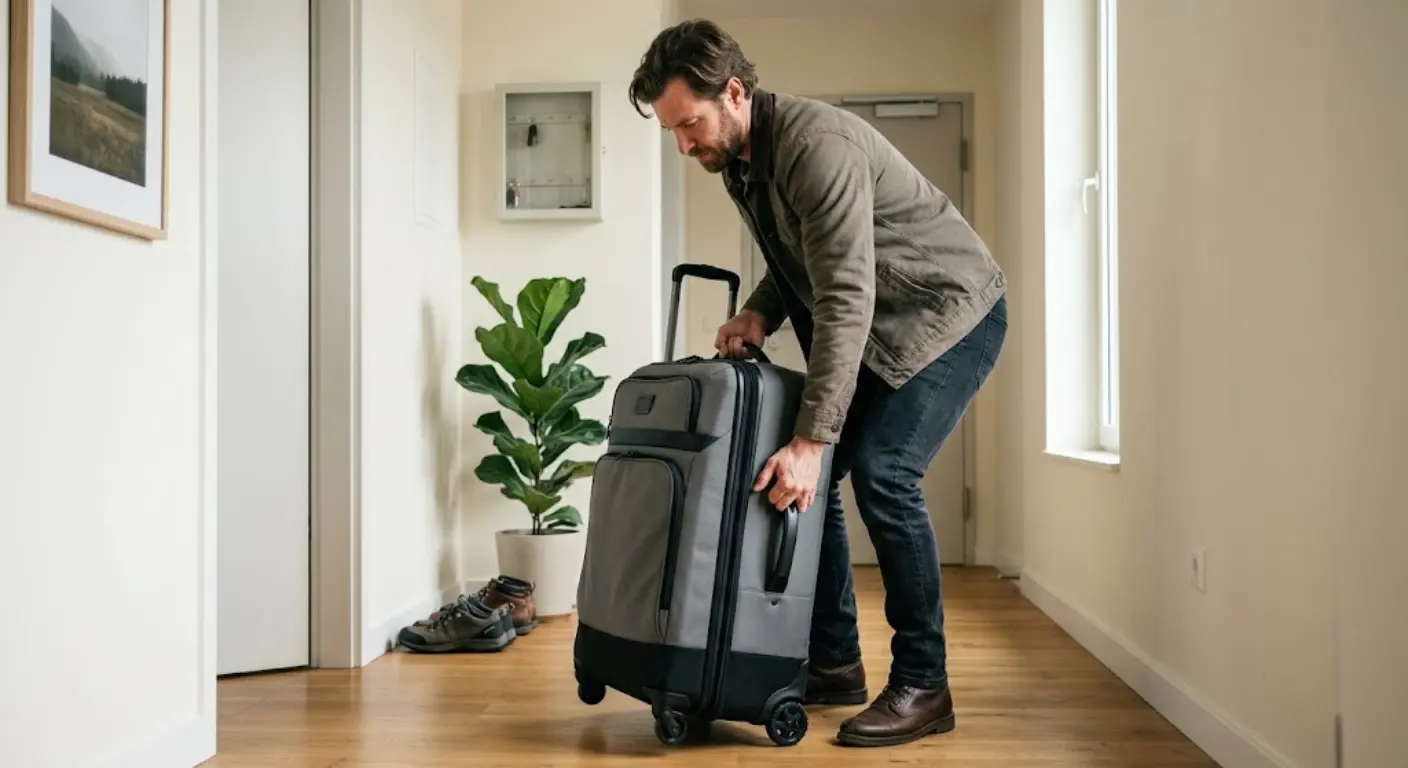
It sits above most standard economy allowances (typically 20–23kg), though some premium tickets and specific carriers permit up to 30kg, check your airline directly, since this varies more than people expect.
What is 30kg equal to in everyday items?
Beyond the usual dumbbell comparison, 30 litres of water is the most precise everyday reference, since a litre of water weighs almost exactly a kilogram.
How heavy is 30kg for a dog?
It falls within the healthy adult range for several medium breeds, including Bulldogs, Cocker Spaniels, and Beagles, though healthy weight varies by breed, so a vet check is the best way to confirm.
Can the average adult carry 30kg?
Yes, for short distances with proper technique, though comfort depends heavily on how the weight is packaged. A well-distributed 30kg backpack is far easier to manage than an unbalanced 30kg box.
How Heavy Is 30kg? Final Answer
30kg equals 66.14 lbs, or about 4 stone 10 lbs, roughly half the body weight of an average adult. Whether it feels heavy has less to do with the number on the scale and more to do with shape, distance, and how well the load is distributed. Next time you’re handed something around 30kg, a suitcase, a dog food bag, a dumbbell, you’ll know exactly what you’re dealing with, and how to handle it without straining yourself.