Quick Answer: Pokemon Card Size
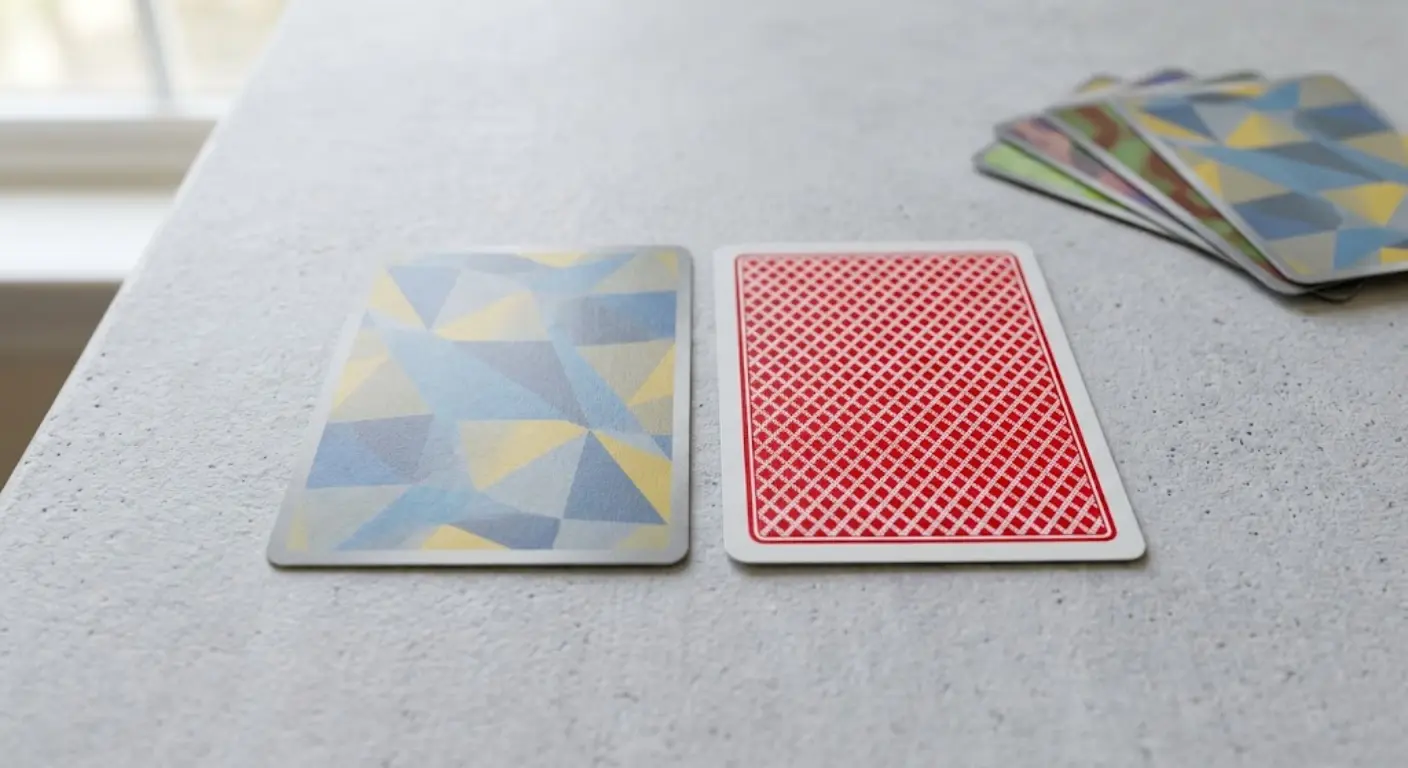
A standard Pokemon card measures 2.5 inches by 3.5 inches (63.5 mm x 88.9 mm, or 6.3 cm x 8.8 cm). This size has stayed the same since the Pokemon Trading Card Game launched in 1996, and it’s identical to the size used for Magic: The Gathering cards and most sports cards. The only cards that break this rule are jumbo and promotional oversized cards, which come in several different sizes depending on when they were made.
That’s the short version. But if you’re buying sleeves, printing custom cards, checking for fakes, or just curious about the details, here’s everything else worth knowing.
At a Glance: How Pokemon Cards Compare
| Card Type | Size |
|---|---|
| Standard Pokemon Card | 2.5″ x 3.5″ (63.5 x 88.9 mm) |
| Magic: The Gathering Card | 2.5″ x 3.5″ (identical) |
| Yu-Gi-Oh Card | 2.3″ x 3.3″ (59 x 86 mm, smaller) |
| Pre-2020 Jumbo Pokemon Card | ~5.7″ x 7.87″ (145 x 200 mm) |
| Post-2020 Jumbo Pokemon Card | ~5.37″ x 7.37″ (136 x 187 mm) |
Standard Pokemon Card Dimensions
Height, Width & Aspect Ratio
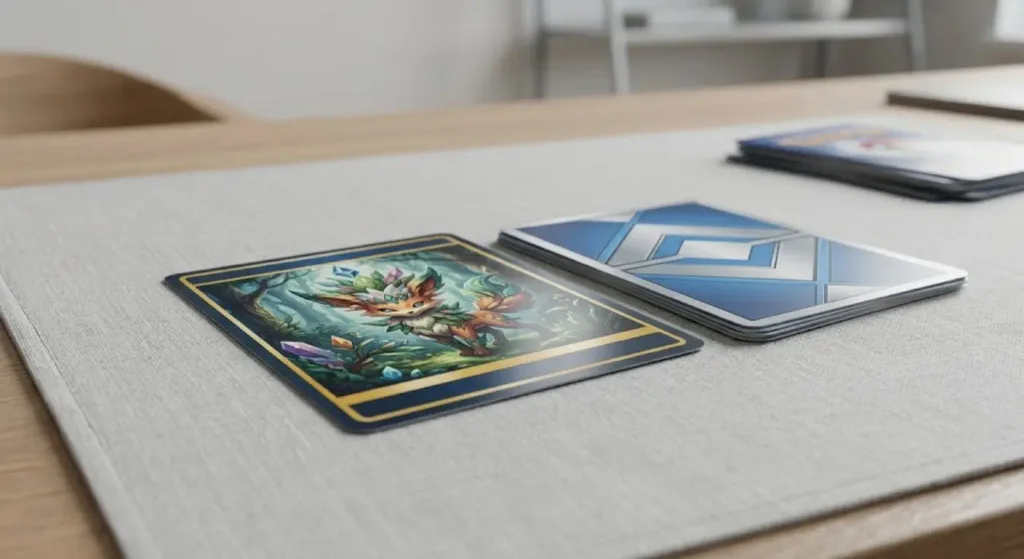
Every standard Pokemon card whether it’s a common Pikachu or a rare secret-rare Charizard is exactly 2.5 inches wide and 3.5 inches tall. That works out to an aspect ratio of 5:7. It’s why the card feels noticeably taller than it is wide. Rarity doesn’t change the size, either. A basic Energy card and a full-art Ultra Rare are cut to the exact same dimensions.
Thickness and Weight
Beyond height and width, two details matter more than most people realize:
- Thickness: About 0.012 inches, or roughly 0.3 mm. In the trading card world, this is referred to as 35pt (points), which becomes important later when you’re choosing a toploader.
- Weight: Around 1.8 grams per card. This is a small but useful detail if you’re weighing a stack to estimate how many cards it contains, or checking whether a card feels unusually light or heavy (a common fake indicator, more on that below).
Has the Size Ever Changed Since 1996?
No. Unlike some collectibles that shift dimensions across releases, Pokemon’s standard card size has been locked in since the very first Base Set. This consistency means a 1999 Charizard and a 2026 pull from the newest set fit into the exact same sleeves, binders, and toploaders. If you’re building a collection over years or decades, this is one thing you never have to double-check.
Pokemon Card Size Conversion Chart (Inches, CM, MM, Pixels)
Different tasks call for different units. Sleeve shopping usually uses inches or mm. Graders think in mm. Designers need pixels. Here’s the full breakdown in one place:
| Unit | Standard Pokemon Card Size |
|---|---|
| Inches | 2.5″ x 3.5″ |
| Centimeters | 6.3 cm x 8.8 cm |
| Millimeters | 63.5 mm x 88.9 mm |
| Pixels (72 DPI, web) | 180 x 252 px |
| Pixels (300 DPI, print) | 750 x 1050 px |
| Pixels (600 DPI, high-res) | 1500 x 2100 px |
| Aspect Ratio | 5:7 |
| Thickness | ~0.3 mm (35pt) |
| Weight | ~1.8 grams |
Keep this table bookmarked if you ever need to jump between units. It saves you from re-Googling the same conversion every time.
Jumbo & Oversized Pokemon Card Sizes
Figures below reflect commonly reported measurements as of 2026. Because jumbo formats have changed more than once, always double-check the size of your specific card against the era it was released in before buying storage for it.
This is where most size guides get messy, because jumbo cards have changed dimensions more than once. If you only collect standard cards, feel free to skip ahead to the sleeve and toploader section this part is really for jumbo and promo collectors. Here’s the clearest way to think about it.
Pre-2020 Jumbo Cards
Older jumbo promos the kind that came in early 2000s-era collector tins and boxes typically measured around 5.7 x 7.87 inches (145 mm x 200 mm). Some early promotional pieces went even larger.
Post-2020 Jumbo Cards
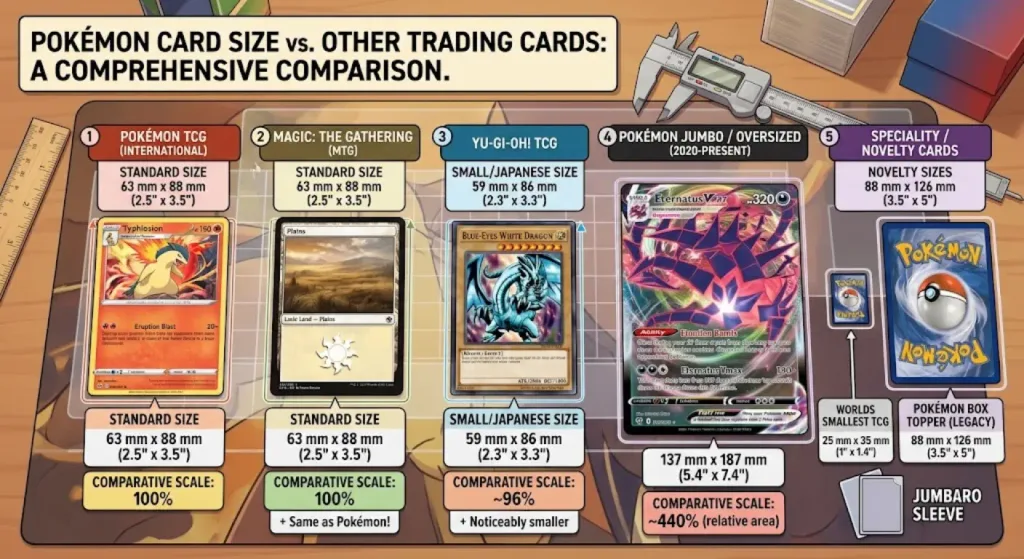
Since the Sword & Shield era, most jumbo cards have settled into a smaller jumbo format, closer to 5.37 x 7.37 inches or 5.4 x 7.4 inches, depending on the specific product. This shift is the main reason you’ll see conflicting numbers online: sites often mix old and new jumbo eras without labeling which one they mean. For a simple visual reference, see our guide on how big 5 inches is.
Box Toppers & CoroCoro XXL Cards
A few other oversized formats show up occasionally:
- Box toppers: About 90 mm x 126 mm, roughly twice the size of a standard card.
- CoroCoro XXL cards: Around 145 mm x 205 mm, slightly larger than standard jumbo XL cards, tied to special Japanese magazine promotions.
Jumbo Card Size Timeline
| Era / Type | Approximate Size (Inches) | Approximate Size (MM) |
|---|---|---|
| Pre-2020 Jumbo (XL) | 5.7″ x 7.87″ | 145 x 200 mm |
| Post-2020 Jumbo (L) | 5.37″ x 7.37″ | 136 x 187 mm |
| Box Toppers | 3.54″ x 4.96″ | 90 x 126 mm |
| CoroCoro XXL | 5.7″ x 8.07″ | 145 x 205 mm |
None of these oversized formats are tournament-legal. They exist purely for display and collecting, so don’t worry about matching them to competitive-play requirements.
Pokemon Card Size vs. Other Trading Cards
Pokemon vs. Magic: The Gathering
These two are identical. Magic: The Gathering cards are also 2.5 x 3.5 inches, so sleeves, binders, and deck boxes are fully interchangeable between the two games.
Pokemon vs. Yu-Gi-Oh
Yu-Gi-Oh cards are smaller, at roughly 2.3 x 3.3 inches (59 mm x 86 mm). The difference is small enough that a Yu-Gi-Oh card can look almost right in a Pokemon sleeve, but it will sit loosely and won’t be properly protected. Always match sleeves to the specific card game.
Pokemon Card vs. Everyday Objects
Numbers on a page can be hard to visualize. Here’s how a standard Pokemon card stacks up against things you probably already have nearby:
| Object | Size | How It Compares |
|---|---|---|
| Pokemon Card | 2.5″ x 3.5″ | Baseline |
| Standard Playing Card (Poker) | 2.5″ x 3.5″ | Identical size |
| Credit Card | 3.37″ x 2.13″ | Wider but shorter, and turned sideways |
| Square Post-it Note | 3″ x 3″ | Wider, but shorter than a Pokemon card |
| Standard Business Card | 3.5″ x 2″ | Same length, narrower and turned sideways |
Pokemon Card Sleeve & Toploader Sizing
Best Sleeve Size for Standard Cards
Standard penny sleeves and deck-protector sleeves are built for the 2.5 x 3.5-inch card size, usually with a finished size around 66-67 mm x 91-92 mm to allow the card to slide in without resistance. “Perfect fit” sleeves run slightly tighter and are popular with collectors who double-sleeve valuable cards before submitting them for grading.
Toploader Sizing (Points Explained: 35pt vs. 55pt)
Toploaders are measured in points (pt), which refers to thickness capacity, not the card’s actual dimensions:
- 20pt-35pt: Fits a single standard Pokemon card with no sleeve or a thin penny sleeve.
- 55pt or thicker: Better if the card is already double-sleeved, or if you’re storing a thicker foil or full-art card.
Sleeve & Toploader Size for Jumbo Cards
Jumbo cards need dedicated oversized sleeves and toploaders. Standard-size products won’t fit them at all. A common option is a 6 x 9-inch rigid toploader, though you should measure your specific jumbo card first, since jumbo sizing has changed over the years, as covered above.
Pokemon Card Size for Digital Design & Printing
This section is aimed at collectors designing custom card art, building proxies for personal playtesting, or setting up a print template. If you’re just buying sleeves or checking a card’s authenticity, you can skip straight to the next section.
Pixel Dimensions at 300 DPI
At 300 DPI, the standard minimum for sharp, print-ready output, a Pokemon card comes out to 750 x 1050 pixels. For extra-crisp results, some print services recommend 600 DPI, which doubles that to 1500 x 2100 pixels.
Why DPI Matters for Custom Prints
At a lower resolution like 72 DPI (typical for web images), the card will still print at the correct physical size, but the image quality will look noticeably soft once printed. If you’re designing anything meant to be held and examined closely, start your canvas at 300 DPI or higher, and build in a small bleed area beyond the card’s exact edge so nothing gets cut off during trimming.
How to Spot a Fake Pokemon Card by Size
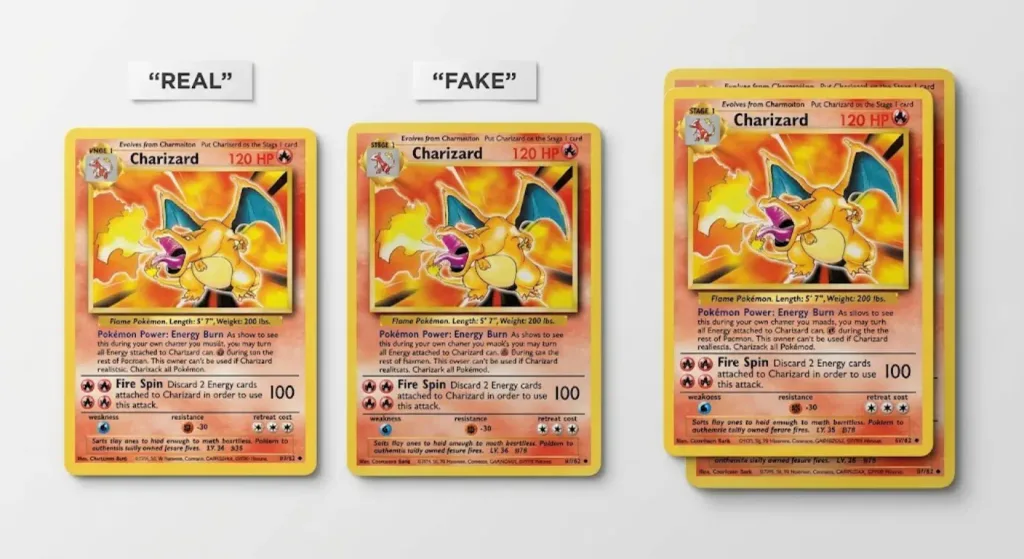
Size is one of the fastest ways to catch a counterfeit, especially for higher-value cards bought secondhand or online. It won’t catch everything on its own, but it’s a strong first-pass check before you look at print quality, texture, and holo pattern.
Tools You Need
A basic digital caliper, often under $10-15, is enough. It measures far more precisely than a ruler or eyeballing it.
Size Tolerance to Watch For
Authentic cards measure almost exactly 63.5 mm x 88.9 mm. Counterfeits are frequently off by a millimeter or more, for example 64 mm wide or 87.5 mm tall. That might sound tiny, but it’s easy to catch with a caliper and is one of the more reliable physical tells when combined with other checks. This same measurement discipline is why size precision matters so much once a card heads to a grading company: even official PSA grading standards treat precise, consistent measurement as central to evaluating a card’s condition, not just its authenticity.
Checklist: Authenticity by Measurement
- Width measures close to 63.5 mm (not 64 mm or more)
- Height measures close to 88.9 mm (not under 88 mm)
- Card flexes smoothly and springs back flat; fakes are often stiffer
- Thickness feels consistent with other cards in your collection (~0.3 mm)
- Corners are rounded evenly, matching other authentic cards
No single check is fully conclusive on its own, but a card that’s off on multiple points is a strong red flag.
Common Mistakes to Avoid
A surprising number of storage and buying mistakes come down to getting the size details wrong. Here are the ones worth double-checking before you spend money:
- Assuming all jumbo cards are the same size. They’re not. Pre-2020 and post-2020 jumbo cards differ meaningfully, so always check the era before buying sleeves.
- Buying Yu-Gi-Oh sleeves for Pokemon cards, or vice versa. They’re close enough to look right in a photo but won’t fit properly.
- Designing custom cards at 72 DPI. The card will be the right size but will look blurry once printed.
- Relying on a ruler instead of a caliper for authenticity checks. A ruler isn’t precise enough to catch a 1 mm discrepancy.
- Assuming Japanese cards are a different size. They’re not. This is a persistent myth. Japanese and English/Western Pokemon cards share identical standard dimensions.
FAQs: Pokemon Card Size
What is the exact size of a Pokemon card?
A standard Pokemon card is 2.5 inches by 3.5 inches, or 63.5 mm by 88.9 mm.
Are Pokemon cards the same size as Magic: The Gathering cards?
Yes. Both games use identical 2.5 x 3.5-inch dimensions, so sleeves and storage products are interchangeable.
Are Pokemon cards the same size as Yu-Gi-Oh cards?
No. Yu-Gi-Oh cards are slightly smaller, at about 2.3 x 3.3 inches (59 mm x 86 mm).
How big are jumbo Pokemon cards?
It depends on the era. Pre-2020 jumbo cards are around 5.7 x 7.87 inches, while post-2020 jumbo cards run closer to 5.37 x 7.37 inches.
Are Japanese Pokemon cards a different size than English ones?
No. This is a common myth. Japanese and English Pokemon TCG cards share the same standard dimensions.
What sleeve size fits a Pokemon card?
Standard sleeves sized around 66-67 mm x 91-92 mm fit a standard Pokemon card properly.
How thick is a Pokemon card?
About 0.3 mm, often referred to as 35pt in toploader sizing.
Conclusion
A standard Pokemon card measures 2.5 x 3.5 inches (63.5 x 88.9 mm), a size that hasn’t changed since 1996 and matches Magic: The Gathering cards exactly. Jumbo cards are the one exception, and they vary by era, so it’s worth confirming which jumbo generation you own before buying sleeves.
Next time you’re standing in front of a wall of sleeve options or trying to tell if a “too good to be true” card is real, you’ve got the exact numbers to check against, instead of guessing.