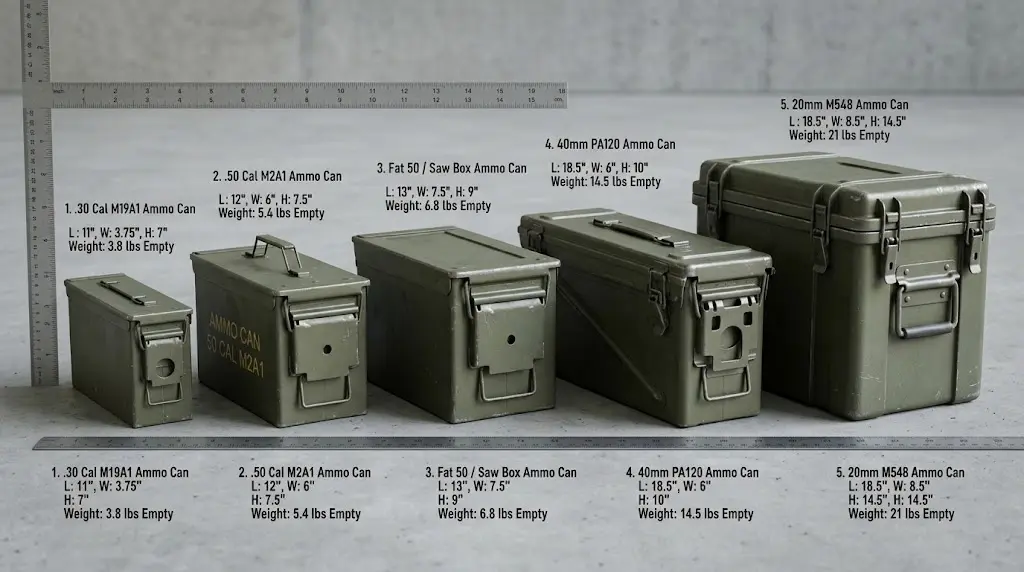
The military ammo can size chart below compares the most common military ammo can sizes, including 30 Cal, 50 Cal, Fat 50, 40mm, and 20mm cans. You’ll find their exterior and interior dimensions, empty and loaded weight, approximate ammunition capacity, and practical uses, along with tips for identifying genuine military surplus cans.
A military ammo can is a sealed steel storage box, originally built to the U.S. Department of Defense’s specifications for transporting ammunition, and now widely repurposed for tools, emergency supplies, and general storage. This guide breaks down every standard size, exact exterior and interior dimensions, empty and loaded weight, and how much ammo actually fits inside. We’ll also cover how to tell a genuine military surplus can from a commercial reproduction, and how to pick the right size for what you’re actually storing.
How This Chart Was Compiled
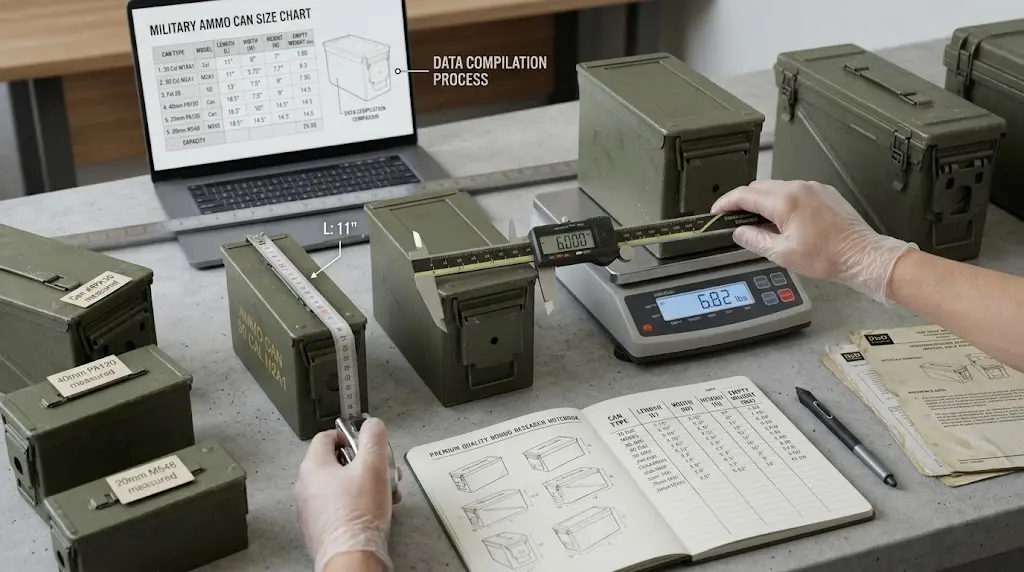
The dimensions and figures in this guide are drawn from manufacturer and retailer spec sheets, the governing military specification for the M2A1 (MIL-DTL-3060F), and stamped NSN records where available, each cited at the point it’s used below. Where sources disagreed, we show the actual range rather than picking one number arbitrarily, and we say plainly where we couldn’t find a reliable figure at all (see the 81mm/120mm sizes below). This is a compiled reference, not a first-hand lab measurement of every can, if you have physical cans on hand, your own tape-measure check is always the most reliable source for your specific unit.
Military Ammo Can Size Chart: Quick Answer
Here’s the short version of the military ammo can size chart. Exterior dimensions are listed in inches (length × width × height).
| Size | Designation | Exterior (L×W×H) | Empty Weight | Typical Use |
|---|---|---|---|---|
| 30 Cal | M19A1 | ~10–11″ × 3.5–3.7″ × 7–7.25″ | ~4–5 lbs | Rifle/pistol ammo, small kits, portability |
| 50 Cal | M2A1 / M2A2 | ~11–11.7″ × 5.5–6″ × 7–7.5″ | ~5–7 lbs | The all-purpose standard; bulk ammo, gear |
| Fat 50 | PA-108 | ~12″ × 6.25–7.5″ × 7.5–9″ | ~7 lbs | More width/height than a 50 cal; bulkier items |
| 40mm | PA-120 | ~17–17.5″ × 5.5–6.1″ × 9.5–10″ | ~12–14 lbs | Long, narrow items; grenade-era ammo |
| 20mm | M548 | ~25″ × 12″ × 15″ | ~25–30 lbs | Largest standard size; bulk rounds, big gear |
A quick honesty note before we go further: if you cross-check ammo can dimensions across different sources online, you’ll notice the numbers don’t always match exactly, one source lists the 30 cal as 10″ long, another says 10.75″, another says 10.9″. That’s not a typo problem, it’s a real-world one. Military surplus cans were manufactured by multiple contractors over decades under evolving spec revisions, and minor tolerances (plus whether a given source measures with or without the handle, latch, or lid lip) account for the spread. The ranges above reflect that reality rather than pretending there’s one exact number. Where we cite a single precise figure below, it’s traced to a specific manufacturer spec or product listing, noted accordingly.
Quick Definitions
NSN (National Stock Number): A 13-digit code the U.S. Department of Defense uses to catalog and identify a specific piece of equipment across the entire military supply system. A stamped NSN is the clearest sign a can was actually manufactured to military spec, not just styled to look like it.
Mil-spec (military specification): A formal government document, for the classic M2A1 can, that’s MIL-DTL-3060F, itself descended from the earlier MIL-B-3060 series, that defines exact construction requirements: steel gauge, seam welds, gasket material, and latch design.
Gasket seal: A rubber strip fitted around the inside of the lid that compresses against the can body when latched, creating the airtight, water-resistant barrier the cans are known for. It only works if it’s intact, a cracked or missing gasket means the seal no longer holds.
What Counts as a “Military” Ammo Can?
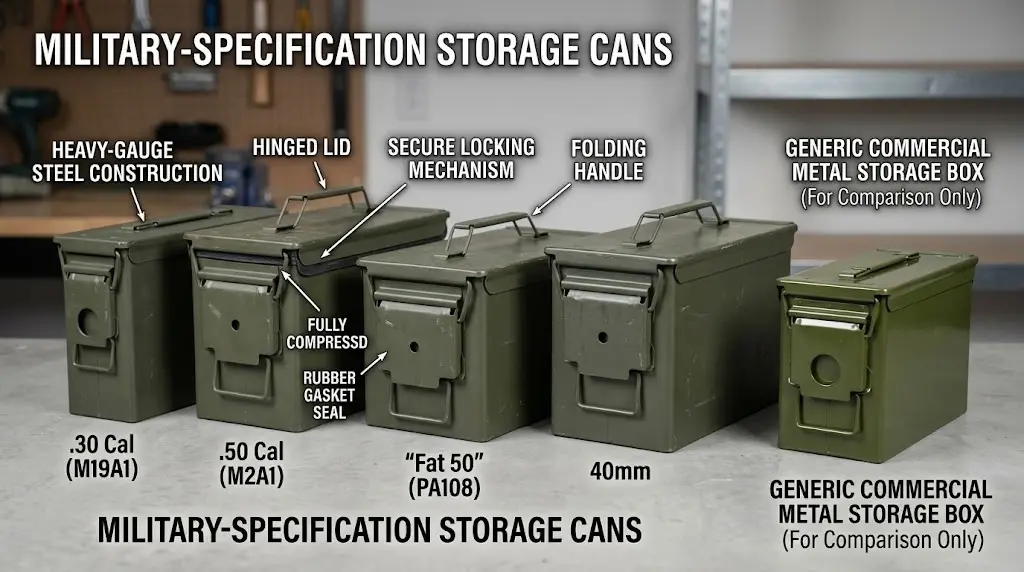
Not every green steel box at the surplus store is built to the same standard. A genuine military ammo can is manufactured to a formal Department of Defense specification, which defines the steel gauge, the seal, and the latch design, not just the outer shape.
Mil-spec construction typically includes:
- Steel gauge: Roughly 0.9–1.2mm (around 20-gauge) welded steel with reinforced corners.
- Rubber gasket seal: A continuous gasket around the lid that creates an airtight, water-resistant seal.
- Tension latch: A fold-over or lever latch that tightens the seal as it closes.
- NSN stamp: A National Stock Number stamped or embossed on genuine surplus cans — the M2A1, for example, carries NSN 8140-00-960-1699, and is built to spec MIL-DTL-3060F (source: detailed M2A1 history and spec reference).
Commercial reproductions can look nearly identical but often use thinner steel (some as thin as 0.6mm), which dents more easily and seals less reliably over time.
The Standard Military Ammo Can Sizes
There are five sizes you’ll run into most often. Each was originally built around a specific type of ammunition, though today people use all of them for far more than ammo storage.
30 Cal Ammo Can (M19A1)
At roughly 10 to 11 inches long, 3.5 to 3.7 inches wide, and 7 to 7.25 inches tall, the 30 cal is the smallest and most portable standard size, weighing about 4 to 5 pounds empty. Its narrow profile is exactly why it’s popular for first aid kits, small electronics, documents, and range-day ammo, it slides under a truck seat or onto a tight closet shelf where wider cans won’t fit. Genuine M19A1 cans commonly carry the NSN 8140-00-828-2938.
50 Cal Ammo Can (M2A1 / M2A2)
Picture the can most people mean when they say “ammo can,” and you’re picturing this one. Exterior measurements run about 11 to 11.7 inches long, 5.5 to 6 inches wide, and 7 to 7.5 inches tall, at roughly 5 to 7 pounds empty, one retailer’s precise listing puts an M2A1 at 11.75″ × 6″ × 7.5″ exterior, 11″ × 5.5″ × 7″ interior, 5.2 lbs empty (source: Ammoman ammo can dimensions reference). The M2A1 and M2A2 share the same external footprint,what differs is a reinforced latch bracket on the M2A2 that keeps the gasket from getting crushed under stacked weight, plus a stenciling change from yellow stamped lettering (M2A1) to white digital-style printing (M2A2).
Fat 50 Ammo Can (PA-108)
Don’t mistake this for just a “bigger 50 cal”, it’s a genuinely different can, originally sized for linked SAW (Squad Automatic Weapon) ammunition belts that wouldn’t fit the standard M2A1. One manufacturer lists it at exactly 12″ × 6-3/4″ × 8-1/2″ exterior (source: Target Sports USA Mil-Spec PA-108 listing), roughly an inch larger in every dimension than the M2A1, at around 7 pounds empty. That extra volume suits bulkier, less uniform items, first-aid supplies, tools, or mixed gear that doesn’t stack as neatly as boxed ammunition.
40mm Ammo Can (PA-120)
This one trades width for length: about 17 to 17.5 inches long but only 5.5 to 6.1 inches wide, standing 9.5 to 10 inches tall, and weighing 12 to 14 pounds empty. It was originally built to hold 40mm grenade rounds for the Mk 19 grenade launcher, and the long interior, often 16 to 17 inches of usable length, is exactly why it’s since become a favorite for cleaning rods, reloading dies, and anything else that needs length more than width.
20mm Ammo Can (M548)
Everything gets bigger here: roughly 25 inches long, 12 inches wide, and 15 inches tall, tipping the scale at 25 to 30 pounds before you put anything inside it. This is the largest standard size, originally designed to hold up to 1,500 rounds of linked 7.62mm or 5.56mm ammunition, and it’s now more commonly repurposed for bulk tool storage or oversized bug-out gear. Two side-mounted handles are standard, loaded, this is a two-handed job at minimum.
Other Ammo Can Sizes: 25mm, 81mm, and 120mm Mortar
Beyond the five sizes most people mean by “ammo can,” three less common but genuine military designations are worth knowing if you’re buying secondhand and run into one:
- 25mm (PA-125): Built for linked 25mm cartridges, roughly 13 to 14 inches long, 5 to 13 inches on the other side dimensions depending on which face you measure, and about 5 to 5.25 inches deep, sellers list the same can’s dimensions in different orders, which is common with this less-documented size. Genuine PA-125 cans carry NSN 8140-01-347-8121.
- 81mm (PA-156 / M821A2): A taller can originally built for 81mm mortar rounds, with handles on both sides and a removable lid. Published exact dimensions are inconsistent across retailers, this is one size where we couldn’t find a reliable, agreed-upon figure, so we’re flagging that gap honestly rather than guessing.
- 120mm mortar (PA-154 / CA44): The largest of the specialty sizes, commonly described by sellers as roughly equivalent in size to four stacked 50 cal cans, built for 1,500 rounds of linked 5.56 or similar bulk rifle ammunition and requiring two people to move when loaded.
These three sizes are far less common on the surplus market than the primary five, and published specs for them are thinner and less consistent, if exact dimensions matter for your use case, measure a specific listing’s stated can rather than relying on a general figure.
Exterior vs. Interior Dimensions: Why They’re Different
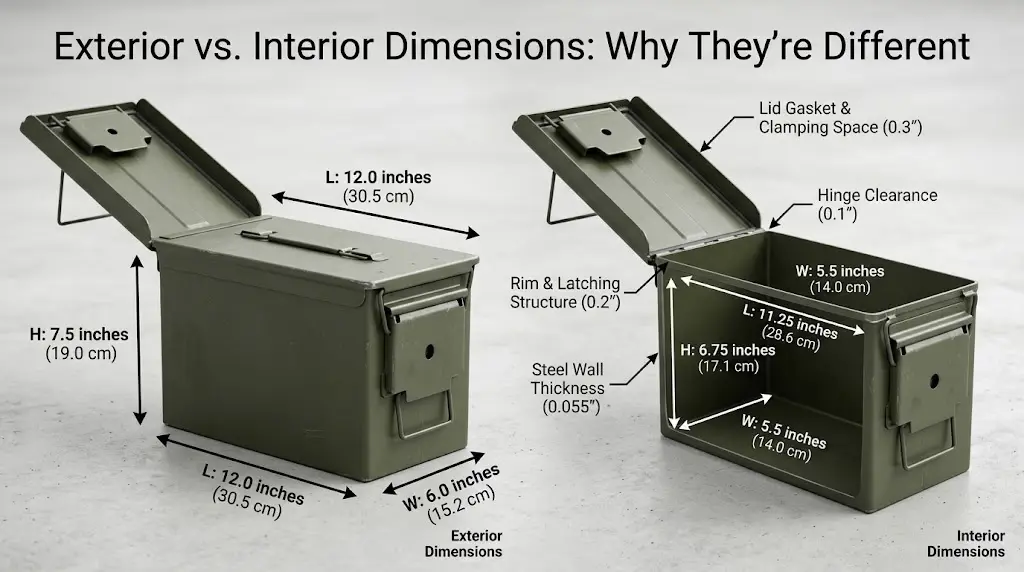
This trips people up constantly when comparing a military ammo can size chart: the exterior dimensions and the interior (usable) dimensions of an ammo can are not the same, and the gap matters depending on what you’re trying to do.
- Exterior dimensions tell you whether the can fits your shelf, safe, or storage space.
- Interior dimensions tell you what will actually fit inside it.
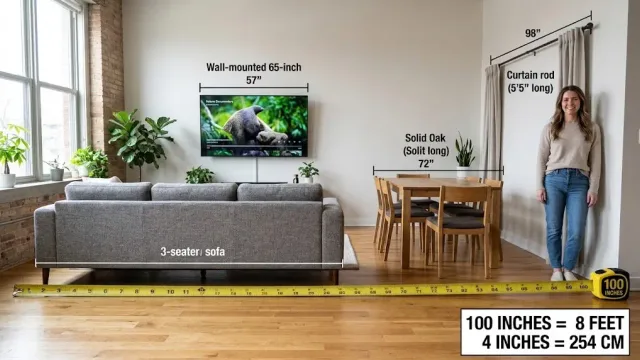
If you’re comparing large storage dimensions, you may also want to see how long 100 inches is to get a better real-world sense of scale.
The difference between the two, typically 0.5 to 1 inch per side, comes from the steel wall thickness, the gasket seat, and the hinge recess along the lid edge. If you’re planning foam inserts, stacking boxed ammunition, or fitting a specific tool, always measure against interior dimensions, not the exterior spec sheet.
How Much Ammo Fits in Each Size?
Capacity depends heavily on caliber, whether the ammo is loose or boxed, and how it’s packed. The figures below are commonly cited approximate capacities for loose ammunition and should be treated as general planning estimates rather than exact counts.
| Size | 5.56/.223 | 7.62/.308 | 9mm | .45 ACP |
|---|---|---|---|---|
| 30 Cal | ~1,000–1,200 | ~500–600 | ~1,200 | ~700 |
| 50 Cal | ~800–1,200 | ~400–640 | ~1,500+ | ~1,300 |
| Fat 50 | ~25–30% more than 50 Cal | ~25–30% more than 50 Cal | ~25–30% more than 50 Cal | ~25–30% more than 50 Cal |
| 40mm | N/A — designed for 40mm rounds | N/A — designed for 40mm rounds | N/A — designed for 40mm rounds | N/A — designed for 40mm rounds |
| 20mm | N/A — designed for 20mm ammunition | N/A — designed for 20mm ammunition | N/A — designed for 20mm ammunition | N/A — designed for 20mm ammunition |
Practical takeaway: if you’re buying by capacity rather than by exact dimensions, the 50 cal can is the most flexible all-around choice, it comfortably handles most common rifle and pistol calibers without the extra bulk of a Fat 50.
How Much Does a Full Ammo Can Weigh?
Weight is often the deciding factor between “convenient” and “not something you want to carry across a parking lot.”
- 30 Cal, loaded: Commonly cited up to around 40 lbs, depending on contents.
- 50 Cal, loaded: Commonly cited in the 55–70 lb range when fully packed with ammunition.
- Fat 50 and larger sizes: Loaded weight climbs quickly and depends entirely on what’s inside, a Fat 50 full of tools will weigh differently than one full of loose ammunition.
Expert tip: if you’re storing ammo for long-term access rather than daily carry, a full 50 cal can at 55+ pounds is manageable for a short lift onto a shelf but genuinely exhausting to carry any distance. Two people are safer than one for lifting a fully loaded 50 cal can off the ground, especially onto a shelf above waist height.
Genuine Military Surplus vs. Reproduction: How to Tell
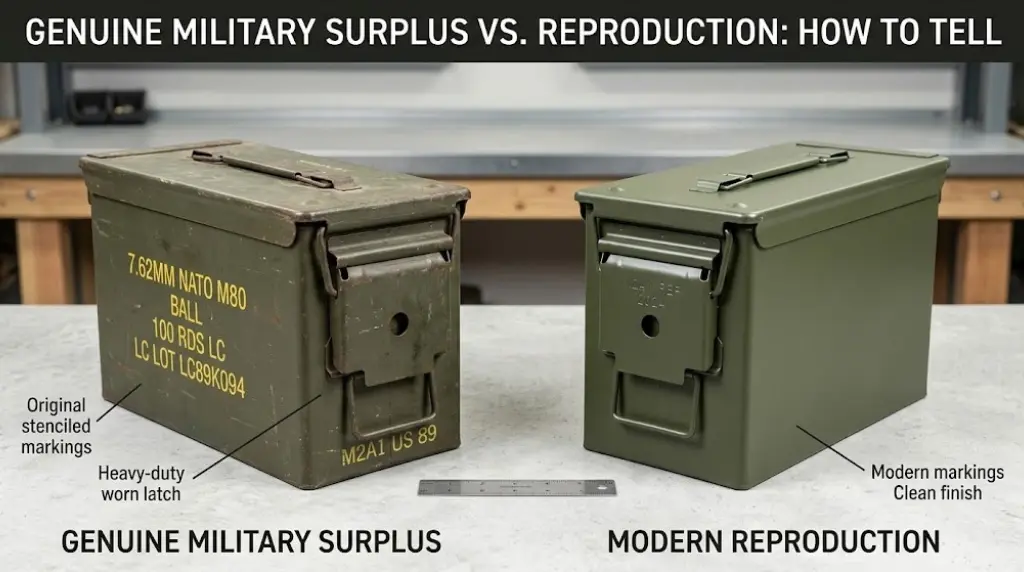
Not every can labeled “military ammo can” for sale online is actual surplus. Here’s how to tell the difference before you buy, and how to avoid the most common size-related buying mistakes at the same time.
Checklist before buying secondhand:
- Check for a stamped or embossed NSN. If a can is marketed only as “military style” with no NSN anywhere, it’s a reproduction, not surplus.
- Press on the side walls. Genuine mil-spec steel (0.9 — 1.2mm, roughly 20-gauge) feels noticeably heavier and more rigid than thinner import steel (as thin as 0.6mm), which flexes and dents under light pressure.
- Check the gasket. A missing, cracked, or brittle gasket means the “airtight” claim no longer holds, regardless of how solid the steel is.
- Inspect the latch. It should close with real tension, not a loose flop, this matters for the seal, not just for looks.
- Expect some surface wear. Dents and paint chips from actual field use are normal on genuine surplus and don’t indicate a fake.
- Confirm the size by interior dimensions, not just the label. A “50 cal” and a “Fat 50” are genuinely different footprints, not just a size-name difference, check the actual measurements, especially if you’re buying to fit a specific space or a set of foam inserts.
- Note the stenciling era on 50 cal cans. Yellow stamped lettering generally indicates an older M2A1; white printed lettering generally indicates a newer M2A2, though repainting can make this unreliable on its own.
Which Ammo Can Size Should You Choose?
Range Day / Bulk Ammo Storage
A 50 cal can is the sweet spot for most shooters, enough capacity for a serious range trip without the bulk of a Fat 50. If you’re storing a single caliber long-term and want maximum portability, a 30 cal works well and keeps loaded weight more manageable.
Emergency & Prepper Kits
Fat 50 and 20mm sizes make sense here, since emergency supplies (first aid, batteries, tools, food) rarely pack as neatly as boxed ammunition, the extra width and height reduce wasted space.
Tools, Documents, or Vehicle Storage
The 40mm can’s long, narrow interior is well suited to tools, rods, or rolled documents. A 30 cal fits neatly into vehicle center console builds and under-seat storage, which is a common DIY use among off-road and overlanding communities.
FAQs: Military Ammo Can Size Chart
What is the largest standard ammo can size?
The 20mm ammo can (M548) is the largest standard military size, at roughly 25 inches long, 12 inches wide, and 15 inches tall.
What size is a .50 cal ammo can?
A standard .50 cal ammo can (M2A1/M2A2) measures approximately 11 to 11.7 inches long, 5.5 to 6 inches wide, and 7 to 7.5 inches tall on the outside.
What’s the difference between a 50 cal and a Fat 50 ammo can?
The Fat 50 is wider and taller than a standard 50 cal, roughly an inch larger in every dimension. It’s a different can built for linked SAW ammunition belts, not just a bigger version of the same one.
Are military ammo cans waterproof?
Genuine mil-spec ammo cans are designed to be airtight and water-resistant via a rubber gasket seal, but that seal needs to be intact and undamaged to actually work, a cracked or missing gasket means the can is no longer sealed.
How much does a full ammo can weigh?
A fully loaded 50 cal ammo can is commonly cited in the 55–70 lb range depending on contents, while a loaded 30 cal can typically maxes out around 40 lbs.
How can you tell if an ammo can is genuine military surplus?
Look for a stamped or embossed NSN (National Stock Number), heavier-gauge steel that resists flexing, an intact rubber gasket, and a latch that closes with firm tension.
What’s the difference between an M2A1 and M2A2 ammo can?
Both are standard 50 cal ammo cans with the same external footprint; the M2A2 added a reinforced latch bracket to protect the gasket under stacked weight, and generally uses white printed lettering instead of the M2A1’s yellow stamped lettering.
Summary: Ammo Can Size Chart Recap
- 30 Cal (M19A1): Smallest, most portable, ~4–5 lbs empty.
- 50 Cal (M2A1/M2A2): The all-purpose standard, ~5–7 lbs empty.
- Fat 50 (PA-108): Wider and taller than a 50 cal, not just bigger, ~7 lbs empty.
- 40mm (PA-120): Long and narrow, ~12–14 lbs empty.
- 20mm (M548): Largest standard size, ~25–30 lbs empty.
When using this military ammo can size chart, decide first by what you’re storing and how you’ll access it, then confirm both the exterior fit (shelf, safe, vehicle) and the interior capacity (what actually goes inside) before you buy. If you’re outfitting more than one can, start with a 50 cal for general use, then size up or down from there once you know what’s left over.