You’re staring at a product listing that says “5 inches,” and you have no idea if that’s going to fit in your bag, on your shelf, or in your hand. If you’re wondering how big 5 inches is, it’s a strangely common problem, most of us don’t walk around with a mental ruler, and inches don’t mean much until you connect them to something real.
Here’s the good news: once you tie 5 inches to a few everyday objects and parts of your own hand, you’ll never have to guess again. This guide gives you the exact conversions, shows you where 5 inches sits on a ruler, and walks through real objects and screen sizes so the number finally clicks.
All conversions and standards referenced in this guide are checked against NIST’s published length and unit-conversion data.
How Big Is 5 Inches? Quick Answer
If you’re wondering how big 5 inches is, 5 inches equals 12.7 centimeters, 127 millimeters, or about 0.42 feet. It’s roughly the width of an adult palm, a little longer than a credit card, and close to the height of a compact smartphone screen. It’s not a small measurement, but it’s not large either, think “fits comfortably in one hand.”
Quick definition: an inch is a unit of length in the U.S. customary and imperial measurement systems, equal to exactly 2.54 centimeters.
How Big Is 5 Inches in CM, MM, and Feet?
Inches are part of the imperial system, which is still standard in the United States, while most of the world uses the metric system. Knowing both makes it easier to compare products, follow international instructions, or just double-check a measurement.
5 Inches to Centimeters and Millimeters
The official conversion, based on the international standard maintained by the National Institute of Standards and Technology (NIST), is 1 inch = 2.54 centimeters. That makes:
- 5 inches = 12.7 centimeters
- 5 inches = 127 millimeters
5 Inches to Feet and Meters
- 5 inches = 0.4167 feet (a little over 4/10 of a foot)
- 5 inches = 0.127 meters
A quick way to remember it: 6 inches is exactly half a foot, so 5 inches is one inch short of that halfway mark.
Quick tip: if you regularly switch between metric and imperial (say, you’re following a recipe from one country while shopping for tools in another), it helps to memorize just one anchor point, 1 inch = 2.54 cm, rather than trying to memorize every conversion individually. From that single fact, you can calculate any inch measurement on the fly.
Why the Exact Conversion Matters
You might wonder why 2.54 cm specifically, and not a rounder number. In 1959, a Federal Register notice formally defined the inch as exactly 25.4 millimeters, aligning U.S. and international length standards. NIST maintains that definition today. That’s why product listings, tools, and instructions from different countries can be converted reliably. The math never changes, even if the object does.
The figures in this guide are based on the standard NIST inch-to-centimeter conversion and typical manufacturer-listed dimensions for the objects mentioned below.
Quick Conversion Table
| Unit | Value |
|---|---|
| Inches | 5 in |
| Centimeters | 12.7 cm |
| Millimeters | 127 mm |
| Feet | 0.42 ft |
| Meters | 0.127 m |
Where 5 Inches Falls on a Ruler
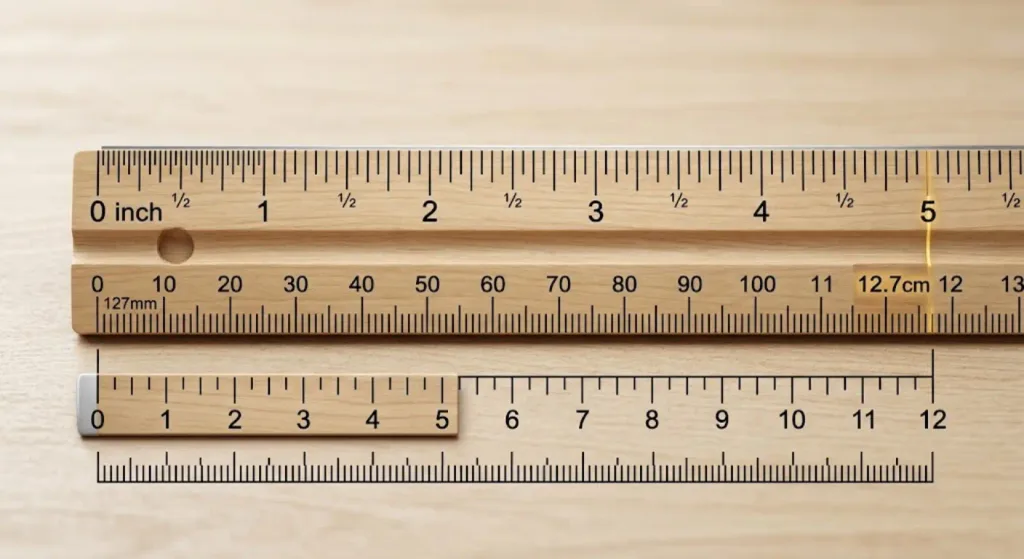
If you’re holding a standard 12-inch ruler, 5 inches lands just before the halfway point. Picture the ruler split into two halves at the 6-inch mark, 5 inches sits one full inch to the left of that line, on the fifth major number. For a more detailed look at exactly where 5 inches falls on a ruler and how to compare it with everyday objects, see our guide on how long 5 inches is.
How to Spot It Without Counting Every Line
Most rulers mark every inch with a longer, bolder line, so you don’t need to count each small tick. Find the “6,” then move one full inch back toward “0.” That’s your 5-inch mark. It’s a quick trick that saves you from squinting at tiny fractional lines.
How Big Is 5 Inches Compared to Your Hand?
Your own hand is one of the most useful measuring tools you already carry, as long as you know your personal proportions, since hand size does vary from person to person.
Palm Width
For most adults, the width of an open palm (measured across the base, not including the thumb) lands somewhere between 4 and 5 inches. It’s one of the fastest visual anchors for this measurement.
Thumb-to-Thumb Method
The average adult thumb is about 2.5 inches long from tip to base. Line up two thumbs end to end, and you’ve got a rough 5-inch reference handy when you don’t have a ruler but do have hands.
Hand Span (Thumb to Pinky)
Stretch your hand out flat and measure from the tip of your thumb to the tip of your pinky finger. For most adults, this full span lands between 7 and 9 inches noticeably longer than 5 inches, but useful as a bracket: 5 inches is roughly two-thirds of a typical hand span, which gives you another quick way to eyeball it without a ruler in hand.
Why Hand-Based Estimates Vary Person to Person
Hand size differs by age, sex, and individual body proportions, so these are estimation tools, not precision instruments. If you want a reliable personal reference, measure your own palm and thumb once with an actual ruler, then use those numbers going forward, they’ll be far more accurate than borrowing someone else’s hand as a guide.
This is actually a technique used well beyond casual shopping decisions. Woodworkers, tailors, and crafters often calibrate their own hand measurements early on specifically so they can work quickly without constantly reaching for a tape measure. Once you know your own palm width or thumb length precisely, that knowledge doesn’t expire, it’s a reference you carry with you permanently.
What Everyday Objects Are 5 Inches?
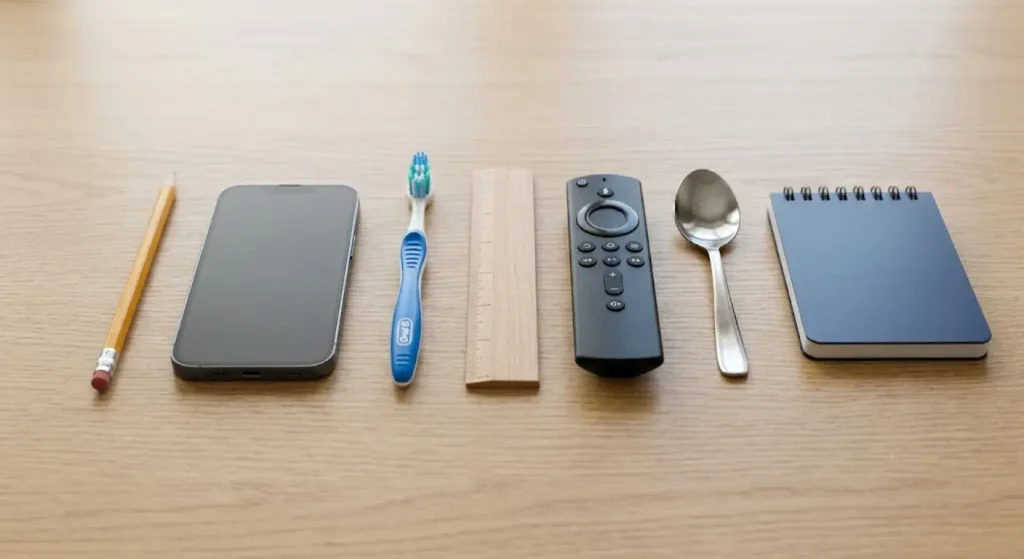
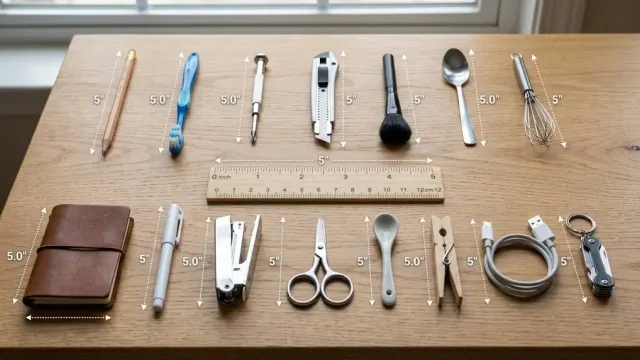
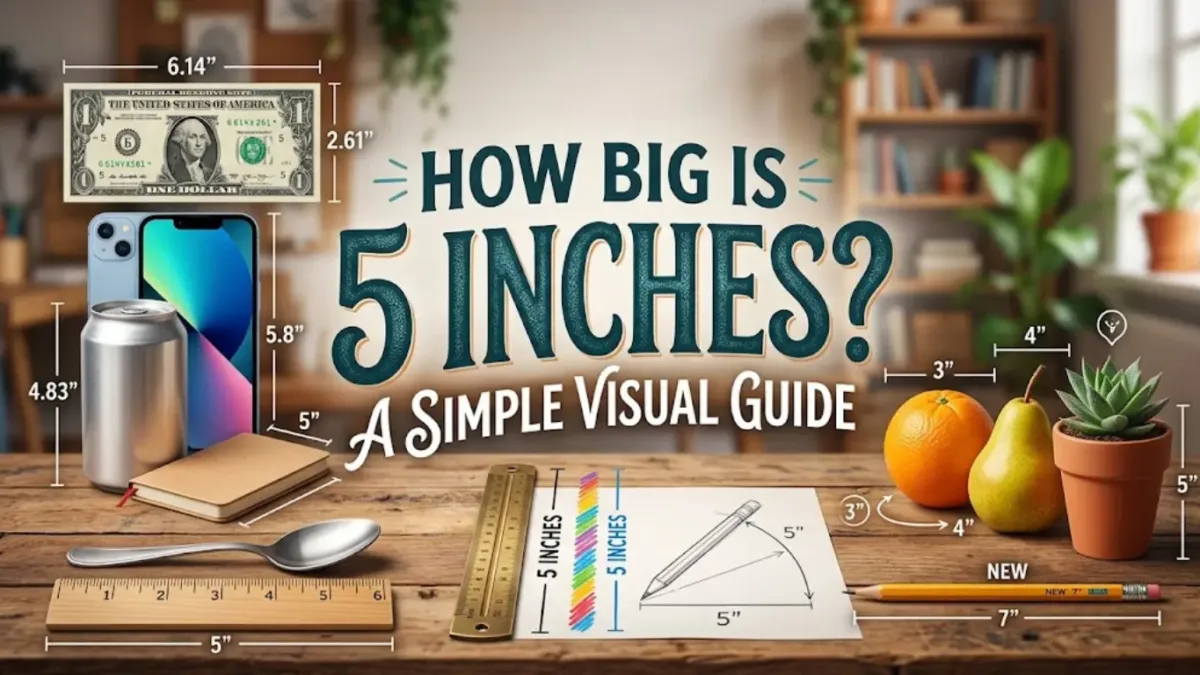
Numbers are abstract. Objects aren’t. Here’s where 5 inches shows up in daily life, organized by category so you can find a comparison that’s actually near you right now.
Tech & Electronics
- The height of many compact smartphone screens
- A small streaming remote (like a mini Roku or Fire TV remote)
- A portable power bank or travel mouse
Kitchen Items
- A standard 12 oz soda can 4.83 inches tall, an industry-standard height set in the 1960s and used across major brands (Coca-Cola, Pepsi, Dr Pepper)
- A typical coffee mug’s height
- A small serving spoon or butter knife
Stationery & Desk Items
- A capped fountain pen or a well-used pencil
- A 5×7-inch photo frame (the shorter side)
- Two playing cards laid end to end (roughly 5 inches combined)
Personal Items
- A disposable razor, from blade guard to handle end
- A passport (close in length)
- A folded pair of sunglasses in its case
5-Inch Object Comparison Table
| Object | Approximate Size | How It Compares to 5″ |
|---|---|---|
| Credit card | 3.4 in long | 5″ is about 1.5 cards end to end |
| 12 oz soda can | 4.83 in tall | Just 0.17 in short of 5″ |
| iPhone SE (3rd gen) | 5.45 in tall (physical height) | About 5% taller than 5″ |
| Disposable razor | ~5 in | Matches almost exactly |
| Coffee mug | ~4.5–5 in tall | Close match |
| Fountain pen (capped) | ~5–5.5 in | Slightly at or above 5″ |
5 Inches vs. Common Screen Sizes
Screen sizes are one of the most common places people run into the “how big is 5 inches” question usually while comparing phones online. A 5 inch phone screen size is a specific, well-known category in the smartphone market, which makes it a useful benchmark even if you’re shopping for something else entirely, like a tablet or e-reader.
Compact Smartphones Around 5 Inches
It’s worth separating two different numbers phone listings use: screen diagonal and device height. The iPhone SE (3rd generation), for example, has a 4.7-inch diagonal display but a physical device height of 5.45 inches, according to Apple’s published specifications, the phone itself is taller than its screen. Budget and mid-range Android models follow a similar pattern, with several older or compact options landing with a screen diagonal close to 5 inches. Older or budget-focused models tend to sit closest to this range, since flagship phones have generally grown larger over the past decade.
Is 5 Inches Big or Small for a Screen?
For a phone, 5 inches is on the smaller, more pocket-friendly end of today’s market most current flagship phones run larger. But for a smartwatch, remote, or handheld device, 5 inches would actually be considered large. Context matters as much as the number itself.
This is a good reminder that “big” and “small” are relative terms. A 5-inch knife blade is on the larger side for a paring knife but tiny for a chef’s knife. A 5-inch pot is small for cookware but oversized for a succulent planter. Whenever you see a measurement on its own, it’s worth asking what category of object it belongs to before deciding whether that number is impressive or unremarkable.
How to Measure 5 Inches Without a Ruler
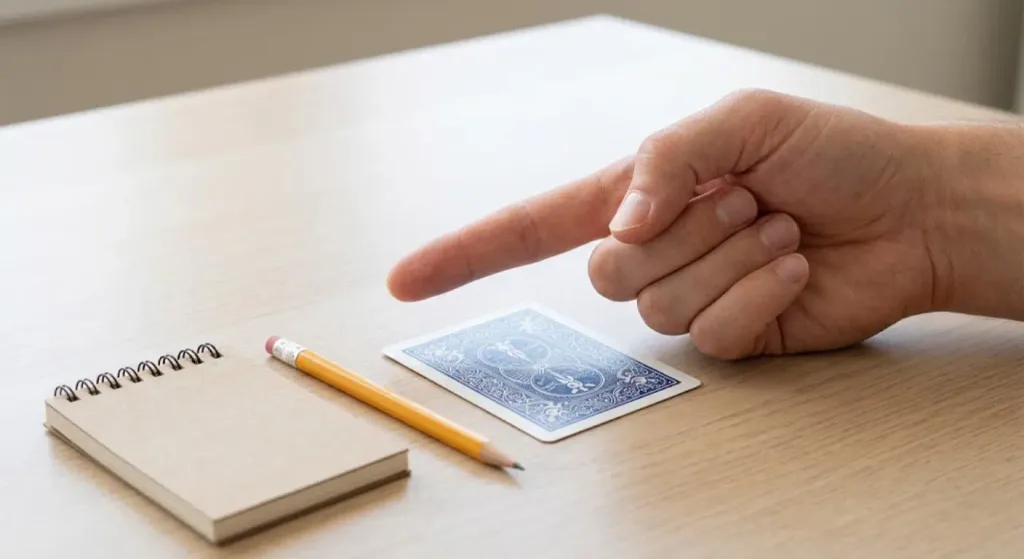
Sometimes you just need a fast estimate. These methods won’t replace an actual ruler, but they’ll get you close enough for everyday decisions.
Quick Checklist of No-Ruler Methods
- Use a credit card and add roughly half its length again
- Line up two thumbs, tip to base, end to end
- Measure your own palm width once and remember the number
- Grab a standard soda can, it’s just under 5 inches tall
- Use a capped pen or a full-length pencil as a rough stand-in
Common Mistakes People Make When Estimating Size
Confusing Inches With Centimeters
This is the single most common mix-up. Five inches (12.7 cm) is significantly longer than 5 centimeters (about 2 inches) nearly two and a half times longer. If a product listing doesn’t specify the unit, double-check before assuming.
Relying on Someone Else’s Hand
Borrowing a friend’s hand span as your measuring stick can throw off your estimate, since hand size varies by several inches across individuals. It’s a useful trick only once you’ve calibrated it against your own hand with an actual ruler.
Trusting Product Photos Over Listed Dimensions
Product images are rarely to scale, and lighting or camera angle can make an item look larger or smaller than it really is. Always check the listed measurement in the product description rather than judging size from a photo alone, this single habit prevents most online shopping size surprises.
Rounding Too Aggressively
It’s tempting to round 5 inches to “about half a foot” for quick math, but that one-inch gap can matter in tighter spaces. A 5-inch shelf bracket that gets treated as 6 inches during planning can leave a visible gap on the wall, or fail to reach a stud. When precision matters mounting hardware, drawer inserts, cases use the exact 12.7 cm figure rather than a rounded estimate.
FAQs: How Big Is 5 Inches
Is 5 inches half a foot?
No. Half a foot is exactly 6 inches. Five inches is one inch short of that mark.
What is 5 inches compared to a hand?
5 inches (12.7 cm) is close to the width of an adult palm and roughly two-thirds of a full hand span from thumb to pinky. Exact size varies by individual, so it’s best used as a rough estimate rather than a precise measurement.
How can I measure 5 inches without a ruler?
The fastest options are a credit card plus roughly half its length again, two thumbs placed tip to base end to end, or a standard soda can, which stands just under 5 inches (about 4.8 in) tall.
Is 5 inches big for a phone screen?
At 5 inches, a screen is on the smaller side for today’s smartphones, which mostly run 6 inches or larger diagonally. It’s still a common, deliberately compact size for budget and mini phone models.
What everyday objects are exactly 5 inches?
The closest everyday matches to a true 5-inch (12.7 cm) length are a disposable razor and a capped fountain pen, with a compact smartphone screen and a coffee mug landing close behind.
How many centimeters is 5 inches?
5 inches equals exactly 12.7 centimeters, based on the standard NIST conversion of 1 inch to 2.54 cm.
Is 5 inches a common size for household objects?
Yes, a 5-inch (12.7 cm) length shows up frequently in kitchenware, stationery, personal care items, and compact electronics, which is part of why it’s such a useful reference length to memorize.
What’s the difference between 5 inches and 5 centimeters?
They’re not close: 5 inches equals 12.7 cm, while 5 centimeters equals only about 1.97 inches. Five inches is roughly two and a half times longer than 5 centimeters, so mixing up the units can lead to a significant sizing mistake.
Conclusion: How Big Is 5 Inches
Five inches equals 12.7 centimeters, 127 millimeters, or about 0.42 feet, a size that fits comfortably in one hand without being tiny. The fastest way to actually picture it is to tie it to something familiar: your palm width, a credit card and a half, a disposable razor, or a compact phone screen. Once you’ve connected the number to a real object, you won’t need to think about the conversion again you’ll just know what 5 inches looks like.
If you found this useful, the same object-based approach works for any length, see how it compares to a size just below it in How Big Is 4 Inches or just above it in How Big Is 6 Inches.